



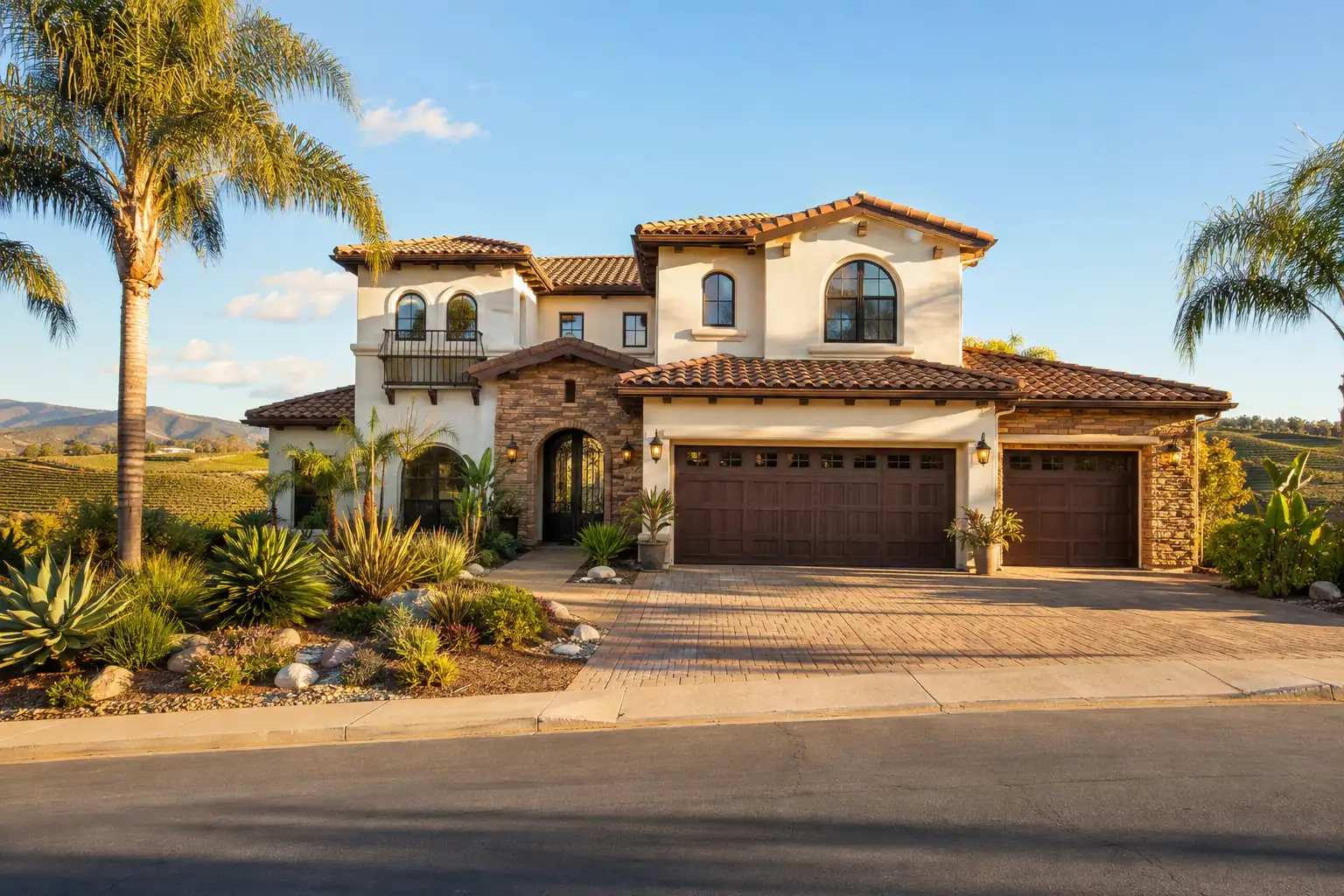
If you’re planning a landscape redo or considering a property with a larger landscaping project ahead, Culver City’s proposed native plant rule deserves a look. It isn’t adopted yet. The proposal would set native planting shares for covered projects, change planting standards and retain the existing prohibition on artificial shrubs, ground cover and turf.
The first question is whether your project would fall within the proposed rules. That needs particular care for a single-family or two-family property, because the draft includes an exception that the staff report doesn’t separately explain for a single-family yard.
Has the native plant rule been adopted?
The proposal had not received a City Council vote as of October 27, 2026.
On October 14, 2026, the Culver City Planning Commission adopted Resolution No. 2026-P005 recommending that the City Council approve the amendment. If adopted as recommended, the changes would take effect on May 1, 2027.
The Planning Commission agenda and staff report identify the amendment as P2026-0170-ZCA. It would change Culver City Municipal Code (CCMC) Chapter 17.310, Landscaping, with a proposed new section, CCMC 17.310.021, called the “Culver City Native Plant Ordinance”.
The current Landscape Ordinance was last updated October 9, 2024, as part of the comprehensive Zoning Code Update.
How much native planting would a covered project need?
For covered projects proposing 500 square feet or more of new and rehabilitated landscaped area, the proposed native planting share depends on the project type.
Residential and mixed-use projects would need native planting in one quarter of eligible landscaped areas. Non-residential projects would need half, and City-owned projects would need three fifths. Projects below the landscape area threshold would be exempt from the native planting requirement.
“Eligible” matters here. The proposed exemptions include:
- City-owned recreational fields and Special Landscape Areas as defined by State law.
- Internal amenity and recreational spaces in multifamily and mixed-use projects.
- Historic sites, unless non-native plantings would harm a historic resource.
- Green roofs, cemeteries, and botanical garden and arboretum plant collections.
- Community gardens and edible gardens.
For a multifamily or mixed-use property, ask the Planning and Development Department which areas would count toward the threshold and which would be eligible for native planting calculations.
What should a single-family or two-family owner ask?
You should ask the Planning and Development Department how the draft’s exception would apply to your particular project before proceeding.
Proposed CCMC 17.310.010.D says the chapter generally would not apply to landscaping for single-family and two-family projects, except for specific setback requirements under 17.310.020.A and maintenance requirements under 17.310.025.E. The staff report does not separately explain how the native planting rule would apply to a single-family yard.
That leaves a question to resolve with the department, rather than a firm conclusion that every yard is covered or exempt. Describe the work you’re considering and ask how the exception, landscaped area threshold and retained rules fit together.
If your landscaping plans accompany an accessory dwelling unit project, the ADU rules guide is a separate reference. Ask the department how the proposed landscaping text would apply to that project.
What would count as a native plant?
Under the proposed text, native plants must be verified using Calscape from the California Native Plant Society and WUCOLS; no other lists or data resources are permitted.
The resolution and proposed code text also call for a planting schedule with a diverse mix of species and prohibit monocultures. Culver City is in WUCOLS Region 3, South Coastal.
Availability is a practical question to ask while developing that schedule. Staff contacted local and regional nurseries within 10 miles in July 2026. Eight of 10 said they could source California natives, based on seasonal availability. That finding doesn’t establish availability for your planting schedule; ask about the plants your project proposes.
Properties in a fire hazard severity zone would also have to comply with all fire safety requirements as determined by the Culver City Fire Department. Ask the Fire Department which requirements apply to your property.
How would the water-efficient landscape rules fit in?
The proposed text gives separate thresholds for compliance with the California Model Water Efficient Landscape Ordinance, or MWELO.
It says new projects with a landscape area greater than 500 square feet, or rehabilitation of an existing landscape with total landscape area greater than 2,500 square feet, must comply with state MWELO rules. It cites California Code of Regulations, Title 23, Chapter 2.7, as provided in CCMC 5.08.045. The redline does not clearly establish whether that sentence is new or existing.
Keep those thresholds distinct from the native planting trigger of 500 square feet or more.
The proposed definition of rehabilitated landscape covers existing landscaped areas that are renovated or remodeled. Non-renovated areas are not required to be upgraded and comply. Under the proposed text, MWELO landscape plans are prepared by a licensed landscape architect or licensed landscape contractor.
A Culver City seller had already scheduled a front-yard refresh when the proposed native plant rule caught her attention. Her nursery list included native plants, ornamental shrubs, and a small section of grass, but she did not know whether the ordinance would prescribe a particular mix. Rather than redesigning the yard around an unfinished proposal, she wanted to understand when the requirement would apply and whether ordinary maintenance would be treated differently from a full landscape project. The timing mattered almost as much as the plants.
Would Ficus trees or artificial turf be affected?
The proposal would prohibit new planting or replacement of Ficus species, while retaining the existing prohibition on artificial shrubs, ground cover and turf.
The proposed Ficus provision cites their ability to cause property damage to structures, sidewalks and similar underground systems. It addresses new planting and replacement. It does not say existing Ficus trees must be removed.
Under the current code, CCMC Section 17.310.025.B.2b already prohibits artificial shrubs, ground cover and turf in the city. Staff recommended keeping that prohibition “at the present time”.
The proposal also includes a higher share of larger minimum tree sizes and detailed landscape plan submittal requirements. If you’re comparing local landscaping rules, the Lancaster landscape ordinance guide concerns another city’s rule. Bring your Culver City questions to the Planning and Development Department.
The short version
Culver City’s native planting changes remain proposed, with a May 1, 2027 effective date if adopted as recommended.
For your project, clarify coverage, eligible landscaped area and the separate MWELO thresholds. Single-family and two-family owners should ask specifically about the draft exception. The staff report says the amendment will not increase or change existing Landscape review fees.
If you’re preparing to sell, keep this proposal separate from the Culver City transfer tax guide.
This guide is educational, not legal or tax advice.
For a separate home value question, use the home value tool.
Common questions
Has Culver City adopted the native plant rule?
As of October 27, 2026, the City Council had not yet voted on it. The Planning Commission recommended approval on October 14, 2026. If adopted as recommended, the changes would take effect on May 1, 2027.
How much native planting does the proposal call for?
For covered projects proposing 500 square feet or more of new and rehabilitated landscaped area, the proposal calls for native planting in one quarter of eligible landscaped areas for residential and mixed-use projects, half for non-residential projects, and three fifths for City-owned projects.
Would the proposal apply to a single-family yard?
The draft generally excludes single-family and two-family projects from the chapter except for specified setback and maintenance rules. The staff report does not separately explain how the native rule would apply to a single-family yard. Ask the Planning and Development Department before your project.
Would existing Ficus trees have to be removed?
The proposed Ficus rule addresses new planting and replacement. It does not say existing Ficus trees must be removed.
Would landscape review fees change?
The staff report says the amendment will not increase or change existing Landscape review fees.
