



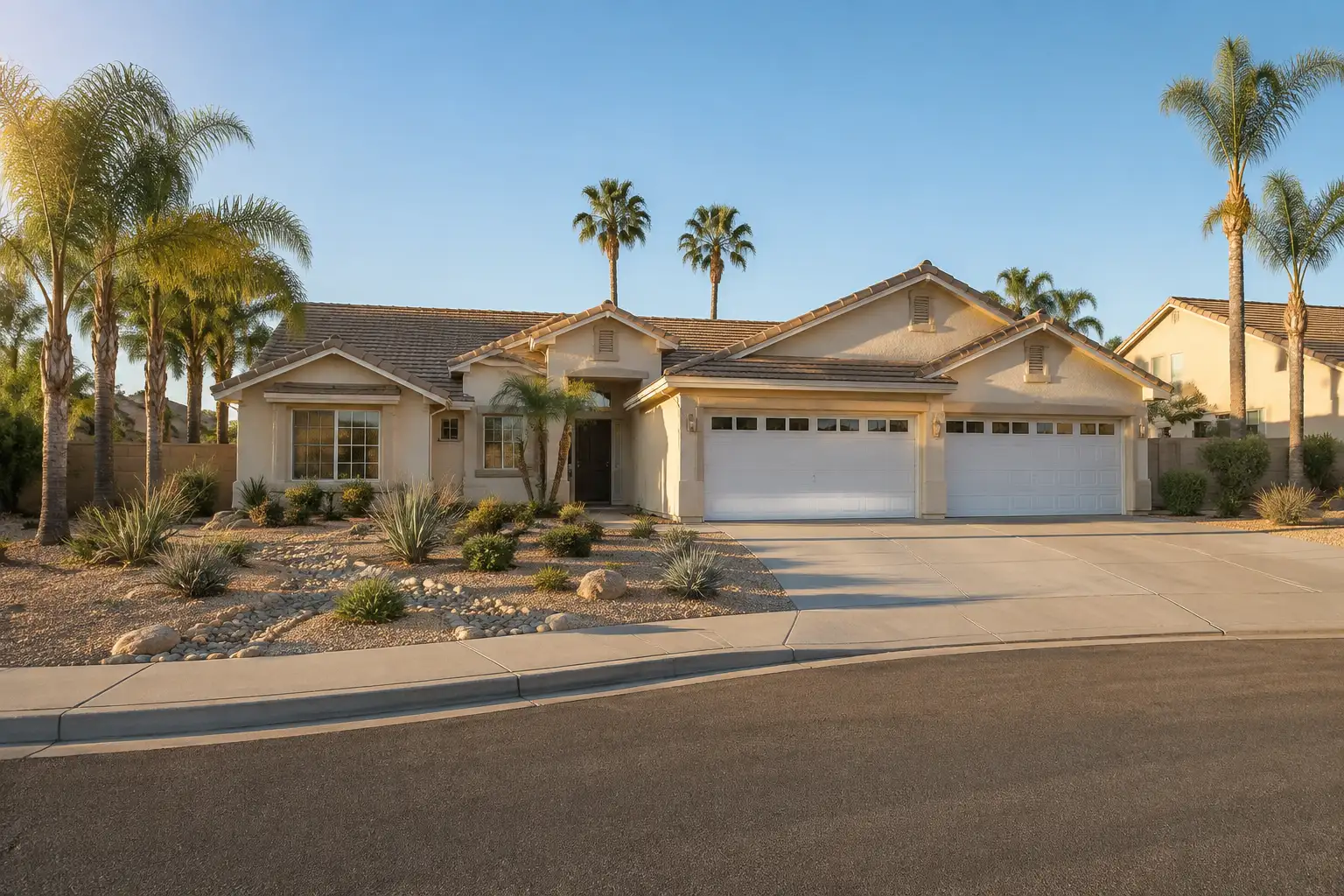
If you’re buying a Gardena home with an ADU, the 31-day rental minimum applies to the main house, too. The Gardena City Council adopted Ordinance No. 1893 on September 8, 2026, changing the minimum rental period from 30 days to 31 consecutive calendar days.
This guide explains the rule and is not tax or legal advice.
What changed, and when does it take effect?
Ordinance No. 1893 rewrites Chapter 18.13 of the Gardena Municipal Code and takes effect the 31st day after its September 8, 2026 adoption.
The changes address accessory dwelling units, or ADUs, and junior accessory dwelling units, or JADUs. They cover rental periods, building standards, application timing, and recorded restrictions that matter when a property changes hands.
The staff report says the amendment followed a letter from the California Department of Housing and Community Development stating that Gardena’s code did not comply with state law. It also identifies AB 1154 and SB 543 as recent bills affecting ADU and JADU development standards and controls.
For statewide context, see California’s ADU rules. For a particular Gardena property, start with the local ordinance and the proposed or existing unit.
What does the 31-day rental rule cover?
The 31-day minimum covers the ADU, the JADU, any other residence on the property, and any part of those residences.
That means a homeowner cannot treat the main house as outside this restriction simply because the additional unit is the ADU. If your plan involves renting either dwelling, or part of one, compare that plan with the minimum of 31 consecutive calendar days.
This rule sits in the ADU chapter, Chapter 18.13, and applies to a property with an ADU or JADU.
Separate sales are restricted as well. An ADU cannot be sold separately from the primary dwelling except through a sale meeting Government Code Section 66341 concerning a qualified nonprofit corporation.
What size and placement rules should you check?
The ordinance limits an attached or detached ADU to 850 square feet of interior livable space for a studio or one bedroom, or 1,000 square feet for more than one bedroom.
Interior livable space includes bedrooms, bathrooms, kitchens, laundry rooms, closets, and interior stairs. The staff report specifically distinguishes that measurement from general floor area.
The general lot rule allows one ADU or one JADU unless the mandatory approval provisions allow more. Those provisions include specified combinations on single-family lots and a new detached ADU of no more than 800 square feet with at least four-foot side and rear setbacks.
For an existing living area or accessory structure converted to an ADU, no setback is required. That also applies to a new ADU in the same location and with the same dimensions. Otherwise, side and rear setbacks cannot exceed four feet, and an ADU must be at least six feet from other buildings on the lot or an adjacent lot.
Check easements before settling on a footprint. Encroachment into a public or private easement requires the easement holder’s written permission.
How do height, parking, and garage-top rules work?
Height and parking requirements depend on the ADU’s location and form, with a separate recorded parking requirement for a garage-top unit.
A detached ADU generally has a 16-foot height limit. Within one-half mile walking distance of a major transit stop or high-quality transit corridor, the limit is 18 feet, with two additional feet if needed to match the primary dwelling’s roof pitch.
For an attached ADU or one above an existing garage, the limit is 25 feet or the zone’s height limit, whichever is lower, and no more than two stories.
The garage-top provision requires the garage to be maintained for parking, the total height of the structure to not exceed 25 feet, and a declaration recording the parking obligation. A buyer should check that declaration before planning another use for the garage.
Parking generally requires one space for an ADU with at least one bedroom. Studios and ADUs created within existing living space need none. Other exceptions include proximity to public transit. Parking removed through a garage or carport conversion need not be replaced.
What fees and application timing does the ordinance set?
The ordinance exempts JADUs and ADUs of 750 square feet or less of interior livable area from impact fees and sets deadlines for application review.
Larger ADUs carry impact fees proportionate to the primary dwelling’s square footage. Applicable public service and recreation impact fees are due before occupancy. Application, inspection, and permit fees still apply; the documents give no dollar amounts.
The city determines completeness within 15 business days. If it does not, the application is deemed complete. A complete application receives ministerial approval or denial within 60 days, or within 30 days when using a city-preapproved plan.
Utility installations must be underground. An ADU within an existing single-family dwelling under the specified conversion provision does not need a separate connection unless built with a new house. Other ADUs require a new or separate connection.
What should a buyer check for a JADU?
A buyer should check the recorded JADU deed restriction because it runs with the land and can be enforced against future purchasers.
The restriction must address separate sale, enlargement beyond 500 square feet, and rentals shorter than 31 consecutive calendar days. It also addresses owner occupancy when the JADU shares sanitation facilities with the house.
In that shared-facility arrangement, the owner must live in the house or JADU, with exceptions for a governmental agency, land trust, or housing organization. The staff report says owner occupancy was removed for JADUs with separate sanitation facilities.
A JADU needs at least an efficiency kitchen, and no additional parking is required. Before selling, review the recorded restriction alongside your California seller disclosures.
What if the existing unit was built without permits?
An ADU or JADU built before January 1, 2020 has a permitting provision that limits certain grounds for denial, but does not guarantee approval.
A permit cannot be denied based solely on building-standard violations or zoning noncompliance unless correction is needed under Health and Safety Code Section 17920.3. The city cannot penalize an applicant for having the unpermitted unit.
An owner may first obtain a confidential third-party code inspection from a licensed contractor. Until January 1, 2030, a notice to correct an ADU building-standard violation comes with a statement that, if the city determines enforcement is not required to protect health and safety, enforcement shall be delayed for five years from the date of the original notice.
If you’re selling, address the permit question directly in your records and disclosures. The guide to unpermitted work disclosure in California provides related context.
The short version
Gardena’s ordinance changes both how you can use an additional unit and which records deserve attention before a sale.
Start with the 31-day rental minimum. Then check the building plans, permit status, any JADU deed restriction, and any garage-top parking declaration. For a specific lot, contact the Gardena Planning Division at (310) 217-9524 or [email protected].
When you’re ready to consider your property’s value, use the home value tool.
Common questions
Does Gardena's 31-day rental minimum apply to the main house?
Yes. On a property with an ADU or JADU, the rule covers the unit, any other residence on the property, and any part of those residences.
Does a Gardena JADU require owner occupancy?
The requirement remains when the JADU shares sanitation facilities with the house, with exceptions for specified organizational owners. The staff report says it was removed for JADUs with separate sanitation facilities.
What record should a buyer check for an ADU above a garage?
The ordinance requires a recorded declaration that the garage must be maintained for parking when an ADU is built under the garage-top provision.
Will an unpermitted ADU built before January 1, 2020 be approved?
Approval is not guaranteed. The ordinance limits denial based solely on building-standard violations or zoning noncompliance, with an exception for corrections needed under the cited health and safety provision.
