



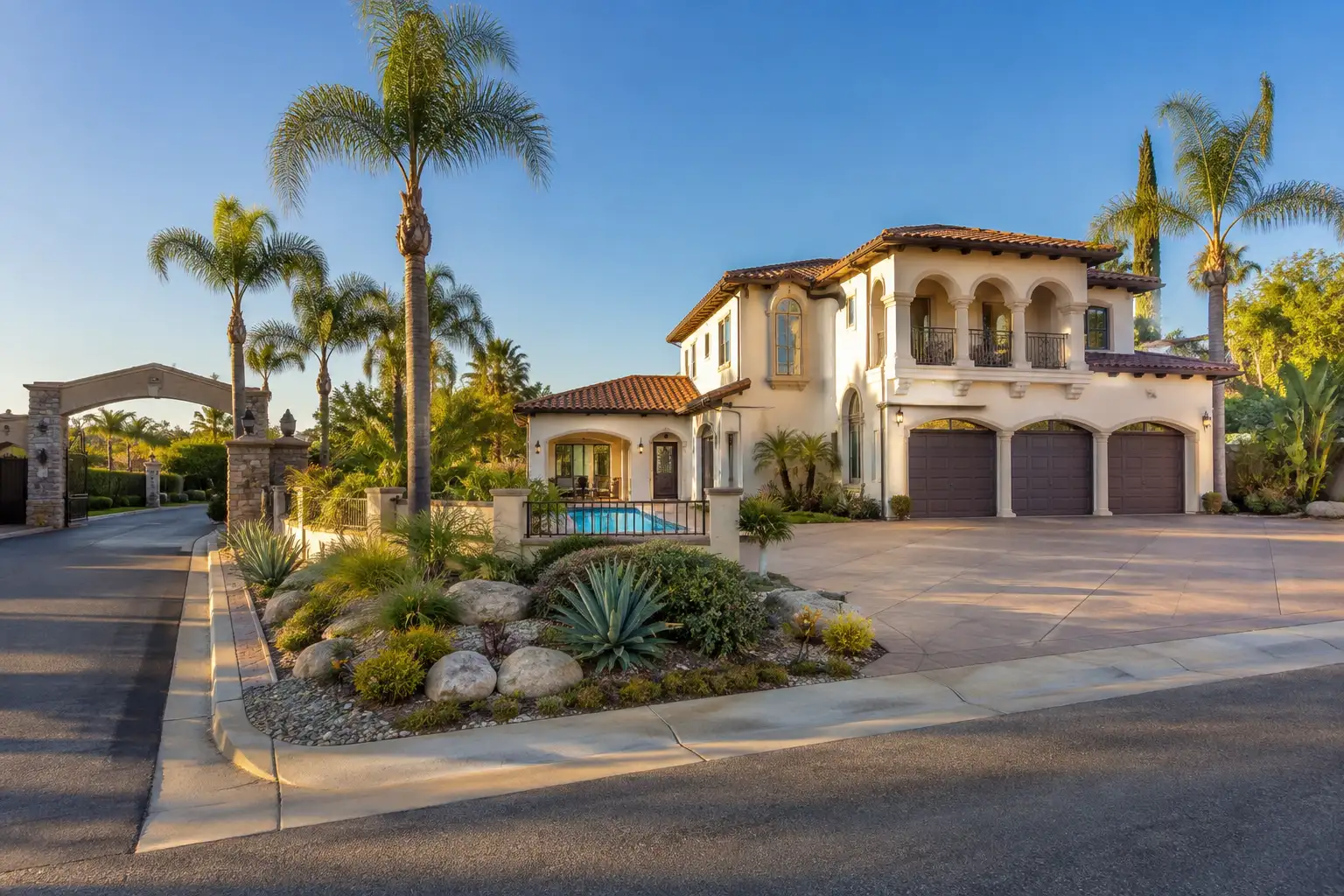
If you’re buying a home in Loma Linda, the utility bill belongs in your budget before closing. The City of Loma Linda puts water, sewer and trash services on one bi-monthly bill. Its listed minimum starts at $205.12 for a 3/4-inch water meter with 64-gallon garbage service, and water consumption charges go on top. Electricity and gas are separate.
This is general information, not legal or tax advice.
What services does the City bill cover?
The City bill covers water, sewer, and refuse and recycling collection services. The City’s Utility Services page identifies water production, distribution and facilities maintenance as City services. Sewer service includes facilities maintenance and treatment. Refuse and recycling collection is provided through a contract with CR&R.
The Finance Department handles customer service requests, bi-monthly billing and payment collection for these services. That’s the department to contact when you need to arrange service or understand an account question.
Electricity and gas need separate attention. The page lists Southern California Edison and Southern California Gas Co. under other helpful contacts, outside the City utility services. When you review a seller’s City bill, don’t treat it as the home’s complete utility budget. It answers the water, sewer and trash question; it doesn’t answer the electricity or gas question.
We were helping a Loma Linda buyer estimate monthly expenses when she asked why the seller’s city utility bill covered more than one service. She had assumed water, sewer and other city charges would arrive from separate providers. We reviewed the bill line by line so she understood what the city collected and which household services would still be billed elsewhere.
What is the minimum bi-monthly charge?
The City’s current minimum bi-monthly charge ranges from $205.12 to $224.48 for the meter and garbage service combinations listed below. Its Utility Services Charges page, marked Updated 07/09/2026, gives these figures:
| Water meter | Garbage service | Minimum bi-monthly billing |
|---|---|---|
| 3/4 inch | 64 gallons | $205.12 |
| 3/4 inch | 96 gallons | $207.48 |
| 1 inch | 64 gallons | $222.12 |
| 1 inch | 96 gallons | $224.48 |
For the $205.12 minimum, the listed components are $45.23 for water, $100.59 for sewer, $58.26 for garbage and $1.04 for household hazardous waste. Choosing 96-gallon garbage service changes the garbage charge to $60.62. A 1-inch meter changes the minimum water charge to $62.23.
These are minimums, not predictions of what you will pay. Keep the meter size and garbage service attached to any figure you use in your purchase budget. A minimum quoted without those details leaves out what makes that figure apply to the property.
How does water use add to the bill?
Water consumption adds a separate charge to the minimum, using hundred cubic feet as the billing unit. The City’s current table labels that unit “HCU FT”; the linked rate study uses “HCF.”
For its “Inside” water consumption charges, the City lists:
| Consumption band as printed | Charge per hundred cubic feet |
|---|---|
| 1 to 18 | $2.41 |
| 19 to 50 | $3.05 |
| 50 and over | $4.27 |
The rate study describes a tiered structure for single-family residential customers and a uniform volume rate for other customers. Its single-family bands are written as 0 to 18 HCF, 18 to 50 HCF, and over 50 HCF.
For budgeting, ask for the last two bi-monthly bills and look at the water consumption charges alongside the minimum. Water use varies by season, so those bills give you more to examine than the minimum alone. The Fallbrook water bill guide is another Learn page to read when you’re working through utility questions for a purchase.
Is another water rate step confirmed?
The City’s page does not confirm that the next proposed water rate step has been applied or scheduled. That is the specific point to check with Finance before using a future figure in your budget.
The rate-study tables the City links for Resolution 780 list the steps as proposed. In the FY 25-26 column, the bi-monthly fixed charges are $45.23 for a 3/4-inch meter and $62.23 for a 1-inch meter. Those match the City’s current-rates table.
The study also lists a January 1 step labelled FY 26-27. That proposed step shows $47.04 for a 3/4-inch meter and $64.72 for a 1-inch meter. Its proposed single-family consumption rates are $2.51, $3.17 and $4.44 per HCF across the listed tiers.
Use the City’s current-rates table for today’s published figures. Keep the proposed schedule separate, and ask whether the next step has been applied. A table showing future steps doesn’t, by itself, resolve the status of the next charge.
What does the sewer charge include?
The City’s current table shows one combined bi-monthly sewer line of $100.59. The older sewer document sets out a collection schedule and a separate treatment pass-through schedule, but the documents read do not show how today’s $100.59 is built.
Ordinance 769, which the City’s page lists as the sewer rate resolution, describes a Joint Powers Agreement between Loma Linda and the City of San Bernardino for wastewater collection and treatment. It also says San Bernardino’s treatment rate component is independent of Loma Linda’s approved components.
That distinction explains why the ordinance contains separate schedules. It doesn’t supply a verified breakdown of the current bill. The documents the City links show no sewer rate action after April 2022.
The ordinance also records a Proposition 218 notice and hearing process. Under the procedure it describes, a fee adjustment cannot be implemented if written protests come from a majority of property owners of record. For your budget, use the current $100.59 line; for its components, ask Finance.
What should you check before closing?
You should check the meter size, the recent bills and the service arrangements needed at closing. The City’s sources explain how to sign up for service, but they do not describe what happens to an existing account, deposits or fees when a property sells.
Keep your utility review alongside other ownership expenses. The California supplemental property tax bill guide addresses a separate bill to consider when planning for a purchase.
How do you arrange service?
You can sign up at City Hall through the Finance Department or call (909) 799-2845, Monday through Thursday, from 7:00 AM to 5:30 PM. The Utility Services page lists a “Utility Service Application Signature Card” and a “Policy for Discontinuation of Residential Water Service.”
The page also says after-hours water connections are available at an additional cost. Ask Finance what that cost is if your service arrangements call for an after-hours connection. The sources give no amount to put in your budget.
For a sale, ask directly how the account should move at closing and what deposits or fees apply. A seller explaining the bill can provide the recent bills and identify the meter size, while leaving the account procedure to Finance. For a separate local land-use topic, see the Loma Linda hillside conservation guide.
The short version
Your Loma Linda City utility budget starts with a bi-monthly minimum and adds water consumption charges. Check the property’s meter size and garbage service before choosing the matching minimum from the City’s table.
Then review the last two bills and ask Finance about service at closing. The next water step remains listed as proposed in the linked rate-study tables; the City’s page does not confirm its application or scheduling.
To put those ownership costs beside a starting estimate of the property’s value, use the home value tool.
Common questions
What services are on the Loma Linda utility bill?
The City bills for water, sewer, refuse and recycling services. Electricity and gas are separate.
What is the minimum bi-monthly bill?
The City's current table lists $205.12 for a 3/4-inch water meter with 64-gallon garbage service. Water consumption charges are added to that minimum.
Does a larger water meter change the minimum?
Yes. With 64-gallon garbage service, the listed minimum is $205.12 for a 3/4-inch meter and $222.12 for a 1-inch meter.
Is the next proposed water rate step confirmed?
The rate-study tables the City links for Resolution 780 list a January 1 step labelled FY 26-27 as proposed. The City's page does not say that step has been applied or scheduled, so ask Finance.
How does the utility account move at closing?
The sources do not describe an account transfer procedure, deposits or sale-related fees. Ask Finance how service should be arranged at closing.
