



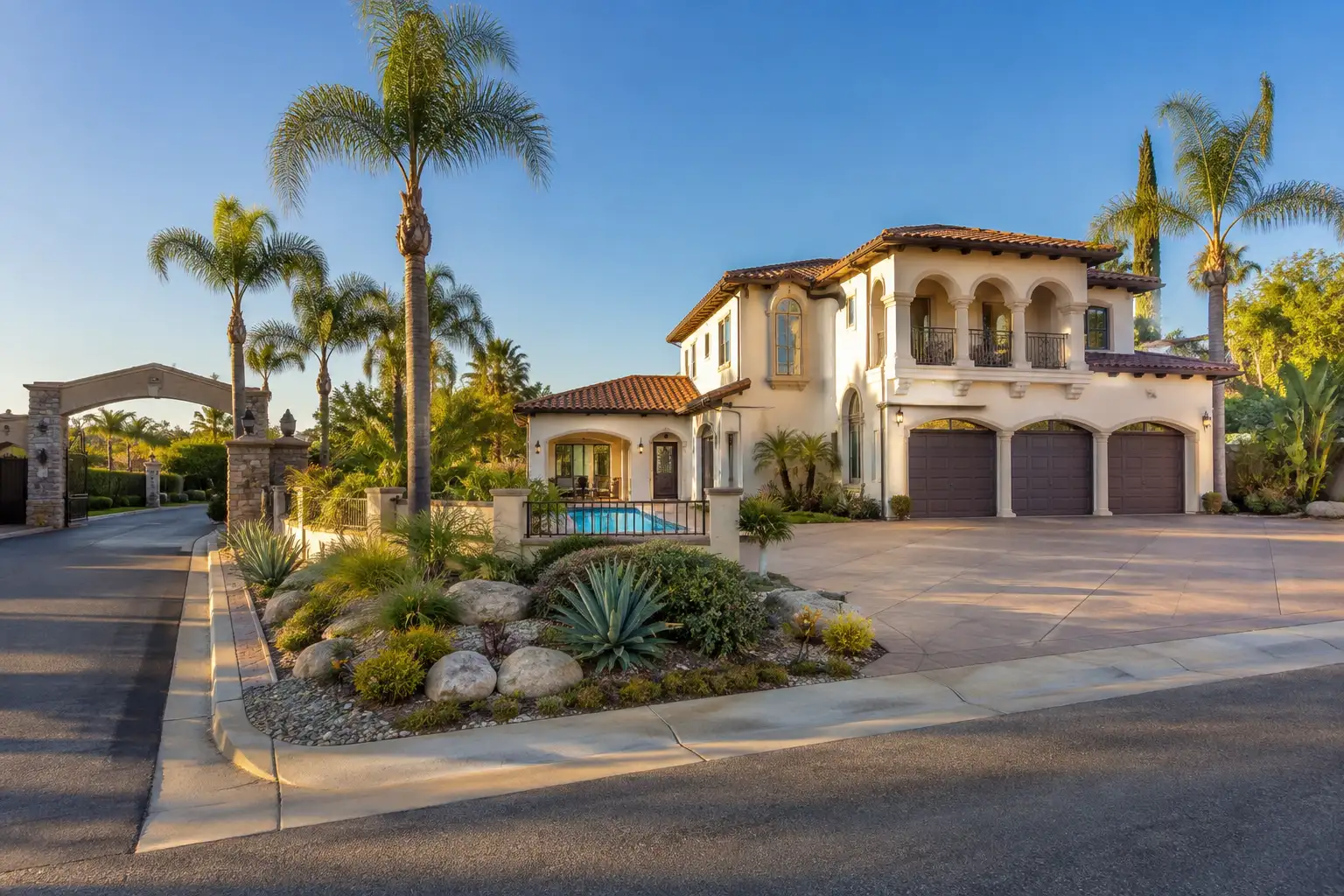
You’re looking at a new home in Ontario Ranch and trying to work out what its special tax will mean for your budget. Start with the parcel: identify its Community Facilities District, or CFD, numbers, then check the current levy, maximum special tax and escalation terms.
The district combination matters here. Ontario’s services report says every new development in Ontario Ranch must form a services CFD, while residential projects typically also form a facilities CFD. That doesn’t establish the charges for the home you’re considering. You need its documents.
C. had been focused on the floor plan until we reached the CFD disclosure in the Ontario Ranch sales office. She tapped the current levy, trying to connect the home she was considering with a budget she could understand. I followed as she turned to the parcel’s Rate and Method of Apportionment. We gave the maximum special tax and escalation terms their own attention. The current charge was one part of that review. We stayed with the documents because her concern extended beyond the figure in front of her to what remained unresolved about future bills.
Why are CFDs part of Ontario Ranch development?
CFDs are part of Ontario Ranch development because the city’s report describes a required services district and, typically for residential projects, an additional infrastructure district.
The City of Ontario’s services administration report traces Ontario Ranch to an 8,000-acre agricultural area annexed on November 30, 1999. It describes plans for more than 47,000 homes and 16 million square feet of retail and industrial uses, with full buildout expected to take 20 years or more.
Those are the report’s projections, not a statement of what has been completed today. They provide context for the services and infrastructure districts described in the report. For your purchase, the useful question is narrower: which districts apply to this parcel, and what do their tax rules say?
Does every home have the same CFD arrangement?
You should check each parcel’s district arrangement because the report does not establish that every Ontario Ranch home has exactly two CFDs.
Its wording is specific: “All new developments within Ontario Ranch are required to form a CFD that pays for public services.” It then says: “Typically, residential projects will also form a CFD that pays for a portion of the public infrastructure that serves each project.”
Keep that distinction intact. Required services districts and typical facilities districts are different statements. Neither gives you a parcel’s complete district list or tax amount.
The broader guide to Mello-Roos can help with the terminology. Your next step is to match the home to its actual CFD number or numbers, rather than treating Ontario Ranch as one district with one charge.
What can the services CFD pay for?
A services CFD can pay for authorized public services, with the exact list set out in that district’s Resolution of Intention.
The services report identifies police, fire, ambulance and paramedic services among the possible uses. It also lists parks, parkways, streets, roads, open space, flood and storm protection, and maintenance or operation of qualifying city property.
That list describes what services CFDs can be authorized to fund. Read the specific district’s Resolution of Intention to establish its authorized services.
Keep the CFD review separate from any HOA review. A CFD is not an HOA, and you should not assume HOA dues pay its special tax. If your purchase also involves association documents, the HOA disclosure guide provides a separate place to begin that review.
When does the special tax start?
According to the services report, a CFD’s special tax starts after a building permit is issued for new construction of a residential unit or nonresidential building within that CFD.
For a buyer comparing new homes, that makes the permit trigger a useful fact to understand. It does not supply the amount for a particular home or establish its future bill.
Consider a buyer reviewing a new Ontario Ranch home. The buyer identifies the parcel and its CFD numbers, then gathers the tax bill, disclosure package, applicable Rate and Method of Apportionment and newest city report. The review keeps the current levy separate from the maximum special tax and checks escalation terms. If the district combination remains unclear, the buyer directs that question to the city’s published CFD contact.
That is a document review you can follow without assuming a charge from another property applies to yours. For a separate new-construction tax topic, see the California supplemental property tax bill guide.
Why can the tax rules differ between districts?
The rules can differ because each CFD uses its own Rate and Method of Apportionment, usually shortened to RMA.
The services report says categories and maximum rates can vary by district. The bonded facilities administration report also describes categories that can depend on development status, land use, ownership and building size.
It distinguishes Developed Property, Final Mapped Property, Taxable Public Property, Taxable HOA Property and Undeveloped Property. Those are classifications to check in the applicable documents, not labels to assign by looking at a home.
When reviewing an RMA, establish which category applies to the parcel. A maximum rate from a different district or property category does not establish the maximum for your purchase.
Which documents should you gather?
You should gather the tax bill, disclosure package, applicable RMA and newest city report, using them together to check the parcel’s special tax.
The checklist is straightforward:
- Identify the parcel and its CFD number or numbers.
- Find the current levy and maximum special tax.
- Check the escalation terms in the applicable documents.
This is a checklist across documents. It does not mean every figure will appear in one place.
The city’s Special Districts page publishes annual administrative reports and individual CFD reports. It directs questions to [email protected]. If you need clarification, identify the parcel and district numbers so the question concerns the property you’re reviewing.
The fiscal year 2022-23 reports cited here explain the district framework. They are not a current levy schedule for your purchase.
Can you budget from the current levy alone?
You should not treat the current levy alone as the maximum future special tax.
A current charge and an authorized maximum answer different questions. To assess the parcel, review both, along with the RMA’s escalation terms and the newest city report. Without those documents, a future bill would be an unsupported estimate.
Be equally careful with a suggested payoff date or expected reduction. The facts here do not establish either for your parcel.
If a disclosure package leaves one of those points unresolved, keep it as an open question. A clear current figure is useful, but it does not replace the rest of the review.
The short version
An Ontario Ranch buyer should verify the parcel’s CFD combination, current levy, maximum special tax and escalation terms before using the special tax in a purchase budget.
The city’s report requires services CFDs for new development and describes facilities CFDs as typical for residential projects. Check what applies to your home through the tax bill, disclosures, RMA and newest city report.
For a separate look at property value, use the home value tool.
Common questions
Does every Ontario Ranch home have two CFDs?
The city's services report says every new development must form a services CFD and residential projects typically also form a facilities CFD. Check the district combination for the specific parcel.
When does an Ontario Ranch CFD special tax start?
According to the services report, the special tax starts after a building permit is issued for new construction of a residential unit or nonresidential building within the CFD.
Is the current CFD levy the most the parcel can be charged?
A current levy is not necessarily the maximum future levy. Review the parcel's Rate and Method of Apportionment, escalation terms and newest city report.
Where can a buyer find Ontario Ranch CFD information?
The city's Special Districts page publishes annual administrative reports and individual CFD reports. Review these with the tax bill, disclosure package and applicable Rate and Method of Apportionment. Questions can go to [email protected].
