



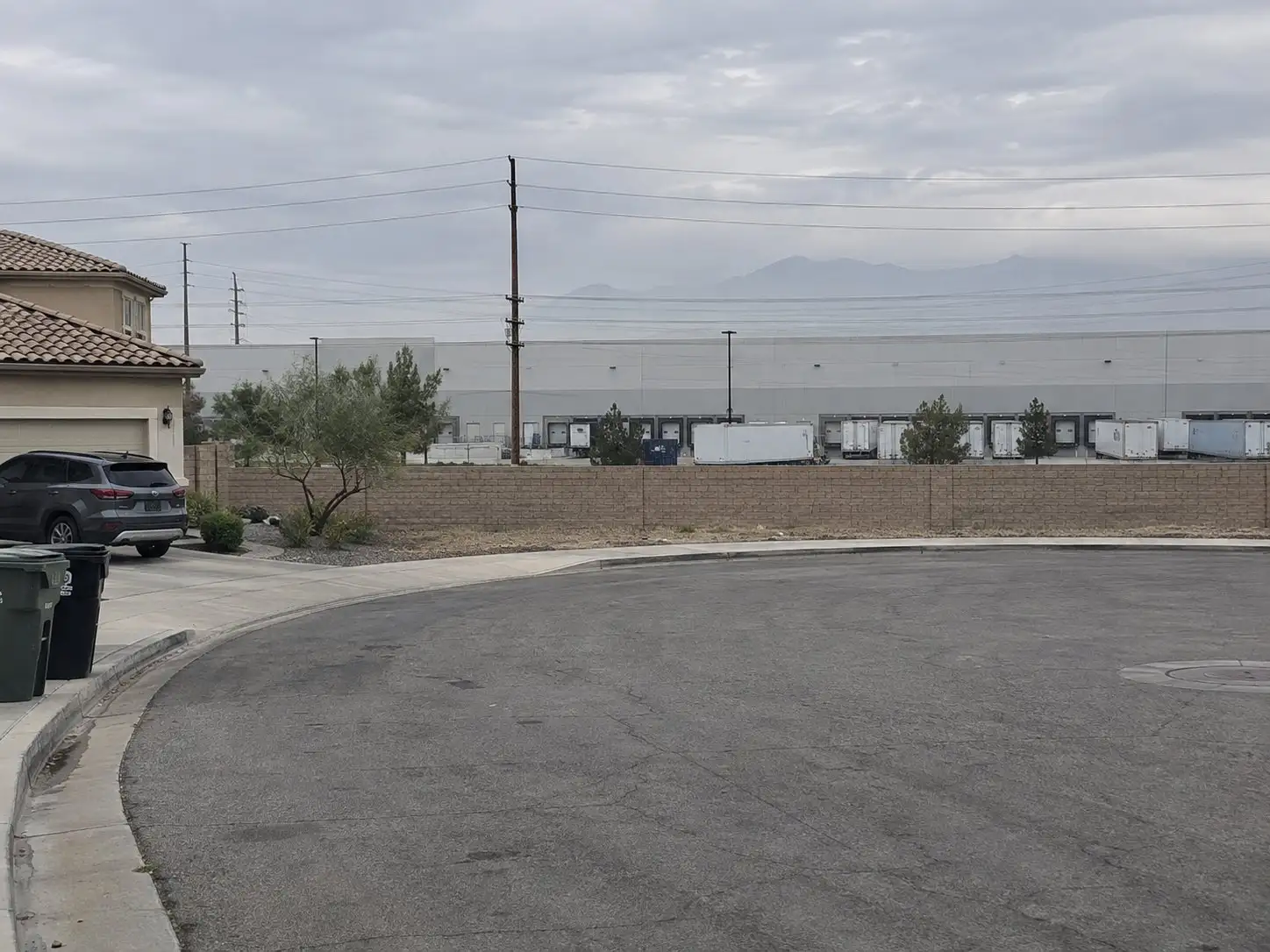
Perris has become one of the Inland Empire’s logistics hubs, and if you’re buying here, at some point you’ll drive past a warehouse, or several, on the way to a house you’re considering. That’s not a reason to avoid the city. It’s a reason to actually check what’s built, what’s approved, and what’s still just a proposal near the specific address you’re looking at, instead of guessing from what you can see off the freeway.
Why this is a live question in Perris right now
The city has been actively adding large logistics buildings for years, and it isn’t finished. The Perris Gateway Commerce Center, a 950,000-square-foot logistics facility paired with a 37,000-square-foot commercial center on Ramona Expressway between Nevada Road and Webster Avenue, broke ground in January 2024 after the City Council approved it in March 2023, according to the city’s own announcement. That’s one project among many the city has approved or is reviewing at any given time.
The city has also put a number on the scale of it. In its own materials on a proposed warehouse business license tax headed to the November 2026 ballot, the City of Perris states it has more than 30 million square feet of warehouse and industrial facilities operating within city limits today. Whatever you think of the ballot measure itself, that figure tells you this isn’t a fringe land use question here. It’s part of how the city is built.
What “near a warehouse” actually means for one address
A warehouse two miles away and a warehouse across the street from a backyard are not the same question, and neither is a fully built and operating facility versus a graded lot with an application pending. Before you can evaluate any of it, you need to know three separate things about the address you’re considering: what’s already built and operating nearby, what’s approved but not yet built, and what’s been proposed or is in the entitlement pipeline but not yet decided. Each one carries a different amount of certainty, and a good agent or a public records search should be able to tell you which category something falls into rather than lump them together.
Where to check what’s approved or proposed nearby
The City of Perris Planning Commission posts a Current Projects page with North Perris and South Perris development maps that show what’s moving through the pipeline by area of the city. That’s a reasonable first stop for a general sense of what’s active near a given part of town. For anything specific to a parcel or cross street, the city’s Planning and Zoning departments hold the underlying project files, and a records request or a call to planning staff will get you further than the map alone.
Ask specifically for the project’s entitlement type, whether it’s a specific plan amendment, a conditional use permit, or a site plan under design review, since each stage means something different for how close the project is to breaking ground.
Reading the CEQA paperwork on CEQAnet
Most warehouse projects of any size go through environmental review under the California Environmental Quality Act, and the resulting documents get logged with the state. CEQAnet, run by the Governor’s Office of Land Use and Climate Innovation, holds CEQA documents that public agencies have submitted to the State Clearinghouse since 1990, searchable by lead agency, project name, or location.
Search Perris there and you’ll find more than one project that has used the name “Perris Gateway” over the years, filed under different State Clearinghouse numbers for different sites and different years. That’s worth knowing before you rely on a project name alone. Confirm the SCH number, the cross streets, and the parcel numbers on a listing before assuming it’s the project you think it is, or that it’s even still active.
Public hearing notices, and catching one before it’s decided
The City of Perris posts a Public Notices page for legal notices tied to city business, including hearings on development projects. It’s not a high-volume feed, and a notice can be as narrow as a cancellation of a single hearing on a specific case number, but it’s the place a genuinely pending decision near an address you’re watching would show up before the Planning Commission or City Council acts on it. If you’re under contract and something nearby is still in play, check that page and ask your agent to watch for the hearing date.
What AB 98 requires for new logistics buildings near homes
Assembly Bill 98, signed in September 2024, adds statewide design and siting standards for new or expanded logistics developments, effective January 1, 2026. It defines a list of “sensitive receptors,” including a residence, a school or daycare, a park or playground primarily used by children, a nursing home, and a hospital.
For a new logistics building on land that isn’t zoned industrial, the law requires truck loading bays to sit at least 500 feet from the property line of the nearest sensitive receptor, measured in a straight line, plus a landscaped buffer of 100 feet with a wall, berm, or dense tree screening. On land already zoned industrial, the loading bay setback drops to 300 feet with a 50-foot buffer. The law also names Riverside County and the City of Perris specifically as part of what it calls the state’s “warehouse concentration region,” which puts Perris under some of the earliest compliance deadlines for truck route planning under the law.
There’s an important limit here. AB 98 mostly governs projects that start their local entitlement process after September 30, 2024. A warehouse that was already built, or already deep in city review before that date, generally isn’t required to retrofit to these standards. Ask whether a specific proposed project near your address is subject to the new rules or grandfathered out of them.
The AQMD warehouse rule, and why it’s not your problem
South Coast AQMD’s Rule 2305, the Warehouse Indirect Source Rule, applies to owners and operators of warehouses with 100,000 square feet or more of indoor floor space within the district’s jurisdiction, which covers the Perris area. It requires those operators to earn points from a menu of actions tied to reducing truck-related emissions, or pay into the program if they don’t. It’s a compliance obligation on the business running the warehouse, not on a homeowner or a buyer. You won’t file anything under it and it won’t appear on your closing paperwork. It’s useful to know it exists mainly because it tells you the state and the air district already treat warehouse truck traffic as something worth regulating, which is a reasonable thing to weigh as you evaluate a specific location.
What to check on the property itself
Public records tell you what’s approved. The property itself tells you what daily life actually looks like there, and the two aren’t always the same thing.
Ask the city or check the circulation element of the general plan for which streets near the address are designated truck routes. AB 98 requires Perris, as part of the warehouse concentration region, to formally identify and post those routes, so this is something you can ask for directly rather than guess at from watching traffic for an afternoon.
Then go see the property in person at more than one time of day, including early morning, since that’s when a nearby logistics operation is most likely to be active before most residential streets wake up. Drive the actual route from the home to the nearest arterial road and notice whether it crosses or runs alongside a road you’ve confirmed is a truck route. None of this replaces the public record. It just tells you what the public record feels like from the porch.
The short version
Perris is a logistics city, and that isn’t hidden information. What’s worth your time is checking the specific address, not the general reputation: what’s built, what’s approved, what’s still just proposed, and whether a nearby project is old enough to sit outside the new state buffer rules or new enough to be bound by them. The city’s planning pages, CEQAnet, and public hearing notices get you most of the way there, and the seller disclosure guide and NHD report cover the rest of what you’ll see in a purchase packet. If a property is near an airport buffer or another mapped land-use constraint, the same logic applies, as it does in Carlsbad’s Palomar Airport disclosure. And if the address also sits in a special tax district, the way to pin down the real number is the same public-records approach used in this Murrieta Mello-Roos lookup.
If you want a second set of eyes on a specific Perris address before you write an offer, start with the home value tool. It is a starting point before a conversation about your specific home.
Common questions
How do I find out what's proposed near a specific Perris address?
Start with the City of Perris Planning Commission's Current Projects page, which posts North and South Perris development maps, then check the city's Public Notices page for hearing notices tied to a project near you. For the environmental review itself, search the project name, the cross streets, or the State Clearinghouse number on CEQAnet, the state's CEQA document database.
Does AB 98 apply to a warehouse that's already built?
Mostly no. The law's setback and buffer requirements apply to new or expanded logistics developments going through entitlement on or after its effective date, and it explicitly grandfathers projects that were already in a local entitlement process before September 30, 2024. An existing warehouse near a home isn't retroactively required to move its loading bays.
Does the South Coast AQMD warehouse rule affect me as a homeowner?
No. Rule 2305, the Warehouse Indirect Source Rule, applies to the owners and operators of qualifying large warehouses, not to residents living nearby. It requires those operators to earn emission-reduction points tied to truck trips. It has no compliance requirement for a homeowner or buyer.
What counts as a "sensitive receptor" under AB 98?
The law defines it specifically: a residence, a school or daycare, a publicly owned park or playground used primarily by children, a nursing home or similar live-in care facility, and a hospital. A home you're buying in Perris would qualify as a sensitive receptor for purposes of the law's setback and buffer rules on any new logistics project built near it after the law takes effect.
