



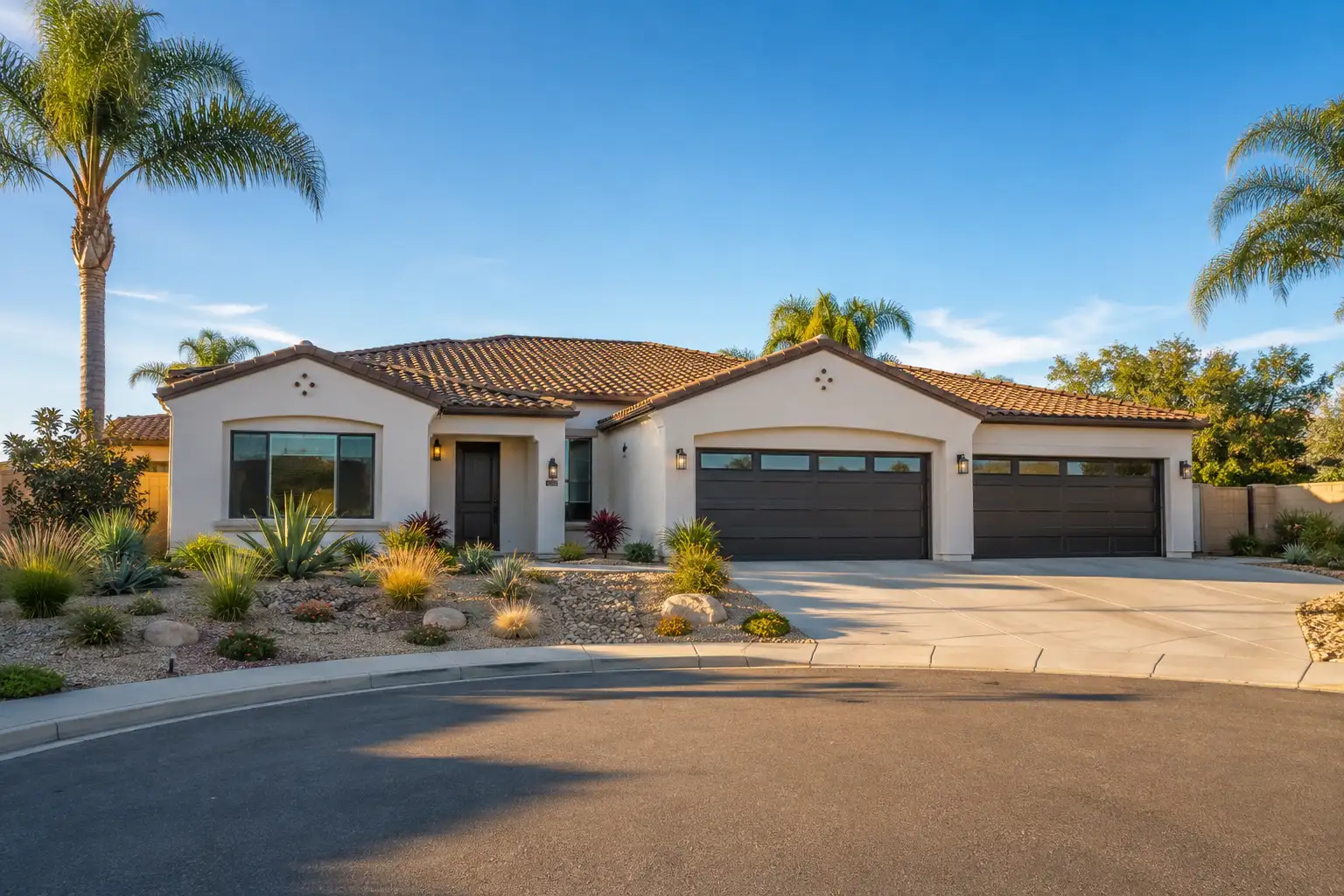
Your Stanton property is empty between tenants, during probate or while you prepare for a sale or remodel. The updated vacant property rules can apply to that house, even without a foreclosure.
The updated rules under Ordinance No. 1171, effective September 11, 2026, apply to residential property as well as commercial and industrial property. A property unoccupied for more than thirty days can count as vacant, and the owner must register within thirty days of it becoming vacant. Registration brings fees, weekly documented inspections and security duties.
This guide is educational, not legal or tax advice.
What changed in Stanton, and when?
Ordinance No. 1171 updated Stanton’s vacant property rules in Chapter 9.16, with an effective date of September 11, 2026.
The ordinance amends Article 3, Vacant and Foreclosed Property Registration. The Stanton City Council introduced it on July 14, 2026, and adopted it on August 11, 2026, under item 11A in the August 11, 2026 City Council minutes.
The City of Stanton’s update says education and outreach continue through the end of 2026. Registration forms and payments opened September 11, 2026, for the first annual review and enforcement period: January 1 through December 31, 2027.
The Orange County Tribune also covered the update in “Taking aim at vacancies”.
When does an empty house count as vacant?
A house unoccupied for more than thirty days can meet the vacant property definition, regardless of zoning.
That isn’t the definition’s sole trigger. It also includes abandoned property, property that is unoccupied and unsecured or boarded, and unoccupied property with multiple code violations. Unimproved land can qualify too.
For residential property with multiple units, fewer than six in ten units occupied is another qualifying condition.
“Unoccupied” means not legally occupied. The city can consider disconnected utilities, accumulated mail or flyers, missing furnishings and other listed signs. Construction also enters the definition when work under an active permit isn’t taking place, or no Building Department inspection under that permit has occurred within the previous ninety days.
Probate doesn’t remove the ownership question: the definition of owner includes executors, trustees and court-appointed administrators. If you’re handling an estate, connect this registration review with the California probate sale process.
What does registration involve?
The owner must register on the city’s form within thirty days of the property becoming vacant.
The application asks for the owner’s name and address, plus the person or management company responsible for security, maintenance and marketing. It also calls for:
- The most recent legal use, square footage and future plans.
- A maintenance and mitigation plan explaining how the property is secured.
- Proof of fire and liability insurance.
- Whether the owner will provide a trespass letter to the Orange County Sheriff’s Department.
Registration renews annually. Report changes to registration information in writing within ten business days. When the property is lawfully occupied again, owners should notify the city so staff can decide whether registration can close.
You can register using the city’s form or in person at Stanton City Hall, 7800 Katella Avenue. Planning staff can answer questions at (714) 890-4256.
For an inherited property, keep these city documents alongside your estate records. The inherited-house basis guide addresses a separate tax topic; it doesn’t replace vacancy registration.
Say a landlord has a Stanton house that remains unoccupied for more than thirty days between tenants. The house can meet the vacancy definition, and registration would include a maintenance and mitigation plan, security details and proof of fire and liability insurance. The landlord would also arrange weekly documented inspections while the property remains vacant. If registration information changes, the landlord must report it in writing within ten business days. When the house is lawfully occupied again, the landlord would notify the city so staff can decide whether registration can close.
How much are the fees?
Registration carries a one-time $45 application processing fee and an annual fee based on the city’s classification.
The annual registration fees are:
- Stable: $300.
- At-risk: $5,000.
- Failed: $9,600.
The ordinance sets the payment schedule by category: stable annual, at-risk quarterly, failed monthly. An owner should ask the city how the annual amount is billed.
The City Council adopted Resolution No. 2026-15 on July 14, 2026. The July 14, 2026 City Council minutes give the fees an effective date of September 12, 2026.
The city assigns classifications through inspections. Stable property is well maintained, readily occupiable and proactively monitored by a responsive owner. At-risk criteria include maintenance gaps, minimal to moderate repair needs or three or more verified code enforcement reports or complaints. Failed criteria include irregular maintenance, an unresponsive or unknown owner without apparent monitoring, or three or more verified code or law enforcement reports.
What does the city expect while it sits empty?
Every vacant property must receive weekly documented inspections and meet maintenance and security rules.
Keep groundcover no taller than six inches and bushes and shrubs no higher than thirty-six inches for a clear street view. Pools and spas must be emptied, kept dry and covered. Remove interior furniture and personal property, promptly remove graffiti and trash, and turn off utilities unnecessary for upkeep.
Security includes securing against entry, a written security plan for the director’s approval, “No Trespassing” signs and locked gates. Ground-floor window coverings must be removed for a clear view inside.
A posted contact sign must show the owner or manager’s name, address and phone number. It must measure at least 18 by 24 inches and be legible from 45 feet.
At-risk and failed properties also need motion-activated exterior lighting and video cameras with live remote viewing and two-way communication. Failed properties need security personnel, patrol or live remote monitoring.
When is a local property manager required?
The ordinance requires a local property management company for failed property or any property whose owner is more than 40 miles away by road.
The company must hold a Stanton business license and be contracted to perform weekly inspections. Section 9.16.290 in the ordinance text in the July 14, 2026 agenda packet, item 12A, uses both conditions as separate triggers.
The city’s news summary describes the rule more narrowly, combining failed status with owner distance. That difference leaves the city’s application of the summary uncertain, so confirm your property’s management obligation with Planning staff.
Say a buyer plans to leave a Stanton house empty before a remodel and is located more than 40 miles away by road. The buyer would check the vacancy timeline, prepare registration information and arrange documented weekly inspections. Under the ordinance text, the distance also triggers a local management company. A valid permit would support an exemption review, but the buyer should contact the city to confirm the exemption and would need diligent progress toward completion within one year of permit issuance.
Is a remodel exempt?
An active-construction exemption exists, but a permit doesn’t make it automatic.
The exemption includes a valid building permit for repair, rehabilitation or construction and diligent progress toward completion within one year of permit issuance. Owners should contact the city to confirm whether an exemption applies.
Keep the permit, inspection history and project progress available for that conversation. The separate vacancy definition concerning inactive work and ninety days without a Building Department inspection makes those records relevant.
If existing work also raises disclosure questions, review unpermitted work disclosure in California alongside the city’s exemption review.
The short version
An empty Stanton house can trigger registration, fees and ongoing upkeep under Ordinance No. 1171.
Check the vacancy timeline, confirm the city’s classification and document weekly inspections. Ask Planning staff about any construction exemption and the management rule. The city identifies 2026 as outreach and calendar 2027 as the first enforcement year.
If a sale is part of your plans, start with the home value tool.
Common questions
When does an empty Stanton house count as vacant?
The definition includes property unoccupied for more than thirty days. Other conditions can also qualify, including property that is unoccupied and unsecured.
How much does vacant property registration cost?
There is a one-time $45 application processing fee. Annual registration is $300 for stable property, $5,000 for at-risk property or $9,600 for failed property.
Does a building permit automatically exempt a remodel?
No. The active-construction exemption includes a valid building permit and diligent progress toward completion within one year of permit issuance. Owners should contact the city to confirm whether an exemption applies.
When is a local property management company required?
The ordinance requires one for failed property or property whose owner is more than 40 miles away by road. The city's summary describes the rule more narrowly, so confirm its application with the city.
