



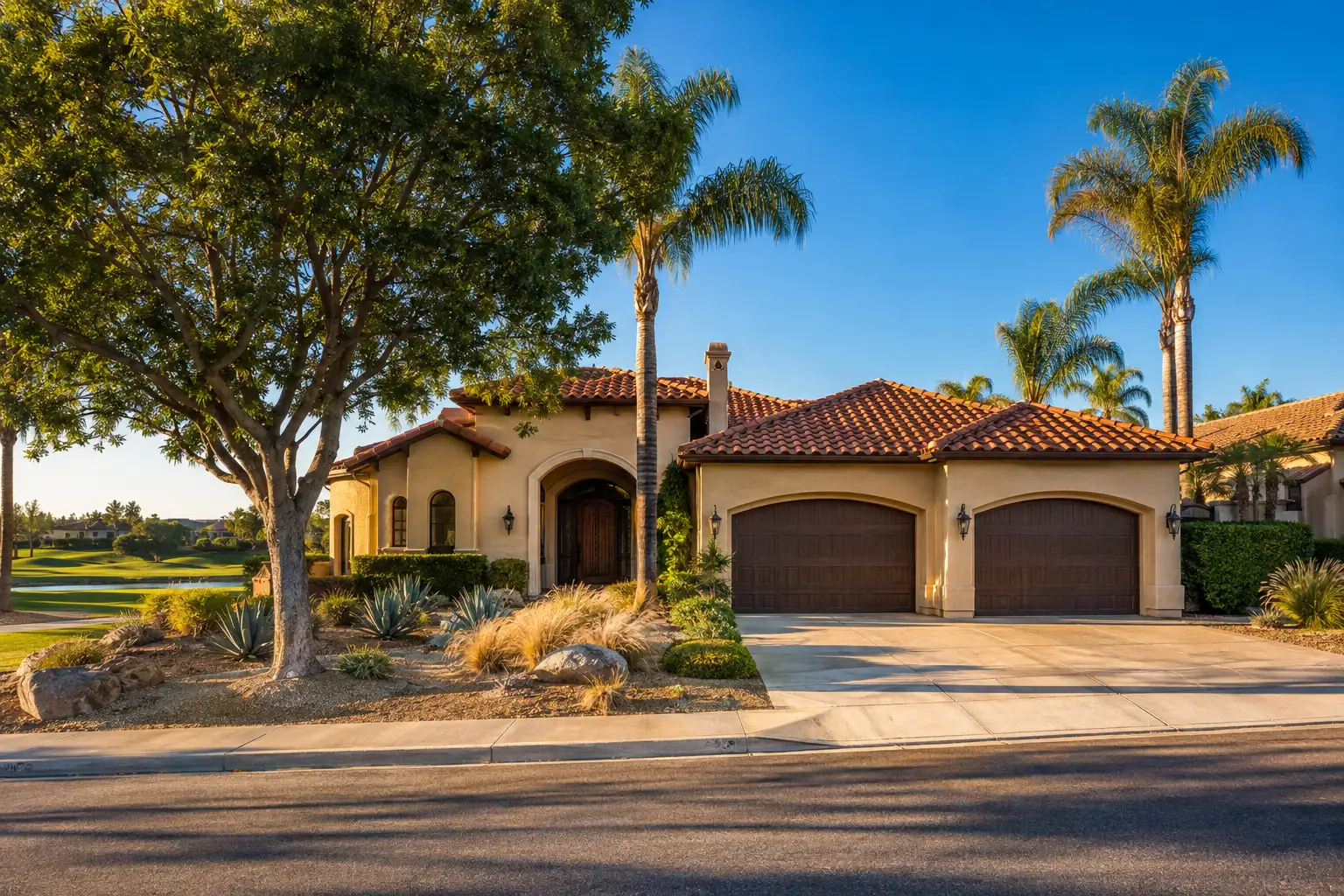
You’ve found an Arcadia house you’d like to expand, or you’re preparing to sell a home with an updated exterior. Does an HOA review board need to approve the work?
Yes, if the property is in one of Arcadia’s five designated design review areas and the project falls within the required review categories. Approval comes before construction. The scope of the work determines the review path, and some work is outside the board’s authority.
Which Arcadia properties have an ARB?
Properties within the five association areas zoned Architectural Design Overlay, identified as “D,” have an Architectural Review Board, or ARB.
City Council Resolution No. 7272, adopted in October 2019, establishes the regulations for these single-family areas:
- Arcadia Highlands Home Owners Association, called Highlands.
- Rancho Santa Anita Property Owners Association, called Upper Rancho.
- Santa Anita Oaks Homeowners Association, called Oaks.
- Rancho Santa Anita Residents’ Association, called Lower Rancho.
- Santa Anita Village Community Association of Arcadia, called Village.
Each area’s ARB is governed by its corresponding association board. This is a city-recognized architectural design review process.
Confirm the specific parcel on the map posted on the City’s Homeowners Associations page. A neighborhood name alone isn’t a parcel test. The map and the boundaries in Exhibit A of the resolution are the starting points.
What work needs approval before construction?
New structures, additions, exterior alterations and other facade improvements require ARB approval before construction, along with qualifying street-visible fences, walls and landscaping changes.
The resolution covers new or modified fences and walls visible from public rights-of-way. It also covers modifications to landscaping visible from those rights-of-way, as stated in Development Code Division 7.
That makes your exterior plans relevant even when you’re keeping the existing house. A proposed addition, facade change or street-visible wall belongs in the approval conversation before work begins.
The ARB applies the City’s Single-Family Residential Design Guidelines. Projects should be harmonious and compatible with neighborhood structures in architectural style, scale, visual massing, dimensions and setbacks. Compatibility does not mean sameness or a required architectural style.
Review also addresses site planning, streetscape, exterior appearance and privacy. Window and second-floor balcony placement should minimize direct views into neighboring residences.
Who decides among the three review levels?
The Development Services Director or designee decides City Review, the ARB chairperson or designees decide Short Review, and the ARB decides Regular Review through a public hearing.
The resolution describes the levels this way:
- City Review covers very minor improvements to existing residences. It requires no public hearing.
- Short Review covers minor additions, alterations and exterior improvements to existing residences. It also requires no public hearing.
- Regular Review covers new single-family residences and major additions, alterations and exterior improvements. A public hearing is required, and decisions must rest on required findings.
Anything ineligible for City Review or Short Review goes to Regular Review. Division 7 supplies the detailed eligibility rules, so these descriptions aren’t enough to classify a particular set of plans.
The director can send a City Review project to Short Review if its design lacks cohesion, conflicts with neighborhood harmony or might adversely affect the neighborhood. The chairperson can send a Short Review project to Regular Review on the same grounds.
Appeals, time limits and notices follow Development Code Divisions 2, 7 and 8.
What is outside the ARB’s authority?
The ARB cannot review certain interior work and low structures, waive City code, create its own standards or decide whether a tree may be removed.
Interior-only work is outside review when it leaves the building’s exterior appearance essentially as it was. Projects involving only structures, roofs, walls or fences no more than two feet above the lowest adjacent grade are also excluded. Landscaping and hardscape in front or street side yards can still receive review.
The rear-fence exception is specific. A fence or wall between neighbors must be outside public right-of-way visibility, only in a rear yard, no higher than a fence facing the street, and without a broad side facing the street.
The board must apply the City’s rules. It cannot modify or waive the Arcadia Development Code, and it cannot create or apply its own standards or policies.
Tree removal is another limit: the ARB cannot approve or deny it. Any recommendations from the board or chairperson must be included with the decision.
Does a new roof need Short Review?
A reroof requires Short Review in both Rancho Santa Anita associations, while the other three areas have posted pre-approved roofing material lists to check.
Rancho Santa Anita Property Owners Association, or Upper Rancho, and Rancho Santa Anita Residents’ Association, or Lower Rancho, have no pre-approved lists. The City says you must apply for Short Review for a reroof project in either area.
Lists are posted for Highlands, Oaks and Village. If your proposed roofing material isn’t on the applicable list, you must apply for Short Review with the ARB.
Check the actual material against the City’s posted list before treating a roof replacement as a settled part of your remodel plan.
Are meetings and decisions public?
ARB meetings must be open to the public under the Ralph M. Brown Act, and the City posts project notices and decisions.
Meeting minutes must be filed with the City Clerk within 15 calendar days after their approval. Public access to meetings is separate from whether a project requires a public hearing: City Review and Short Review do not require hearings; Regular Review does.
For a buyer, the posted notices and decisions offer concrete documents to read alongside the application packets. They don’t replace checking how the rules apply to your proposed work.
What should buyers check and sellers share?
Buyers should check the parcel map, review packets and posted notices, while sellers can share past approvals for work on the property.
Start with the map, then compare your proposed project with the City’s Short Review and Regular Review application packets. Read relevant notices and decisions, and check the roofing list if a new roof is part of your plan.
Keep the architectural review question distinct from the broader topics in the California HOA disclosure guide. This guide addresses the City’s recognized design review authority.
Sellers can make past approvals available so buyers can compare the approved work with the home and their future plans. If required approvals are missing, the guide to disclosing unpermitted work is a related resource. For another city’s design review context, see the Palos Verdes Estates Art Jury guide.
The short version
Your remodel may need approval before construction if the house sits within one of Arcadia’s five “D” overlay areas.
Check the parcel first, then the proposed work and review level. Sellers can share past approvals; buyers should read the City’s packets and posted decisions before relying on a remodel plan. This is educational guidance, not legal advice.
If you’re preparing to sell, start with the home value tool.
Common questions
Which Arcadia associations have Architectural Review Boards?
The five are Arcadia Highlands Home Owners Association, Rancho Santa Anita Property Owners Association, Santa Anita Oaks Homeowners Association, Rancho Santa Anita Residents' Association, and Santa Anita Village Community Association of Arcadia.
Does an Arcadia ARB review interior remodeling?
The ARB does not review work confined to a building's interior that leaves the building's exterior appearance essentially as it was.
Does re-roofing require Short Review?
The two Rancho Santa Anita associations have no pre-approved roofing lists, so their reroof projects require Short Review. In the other three areas, proposed roofing material absent from the posted list requires Short Review.
Can an Arcadia ARB approve tree removal?
No. The ARB cannot approve or deny tree removal, but recommendations from the ARB or its chairperson are included with the decision.
