



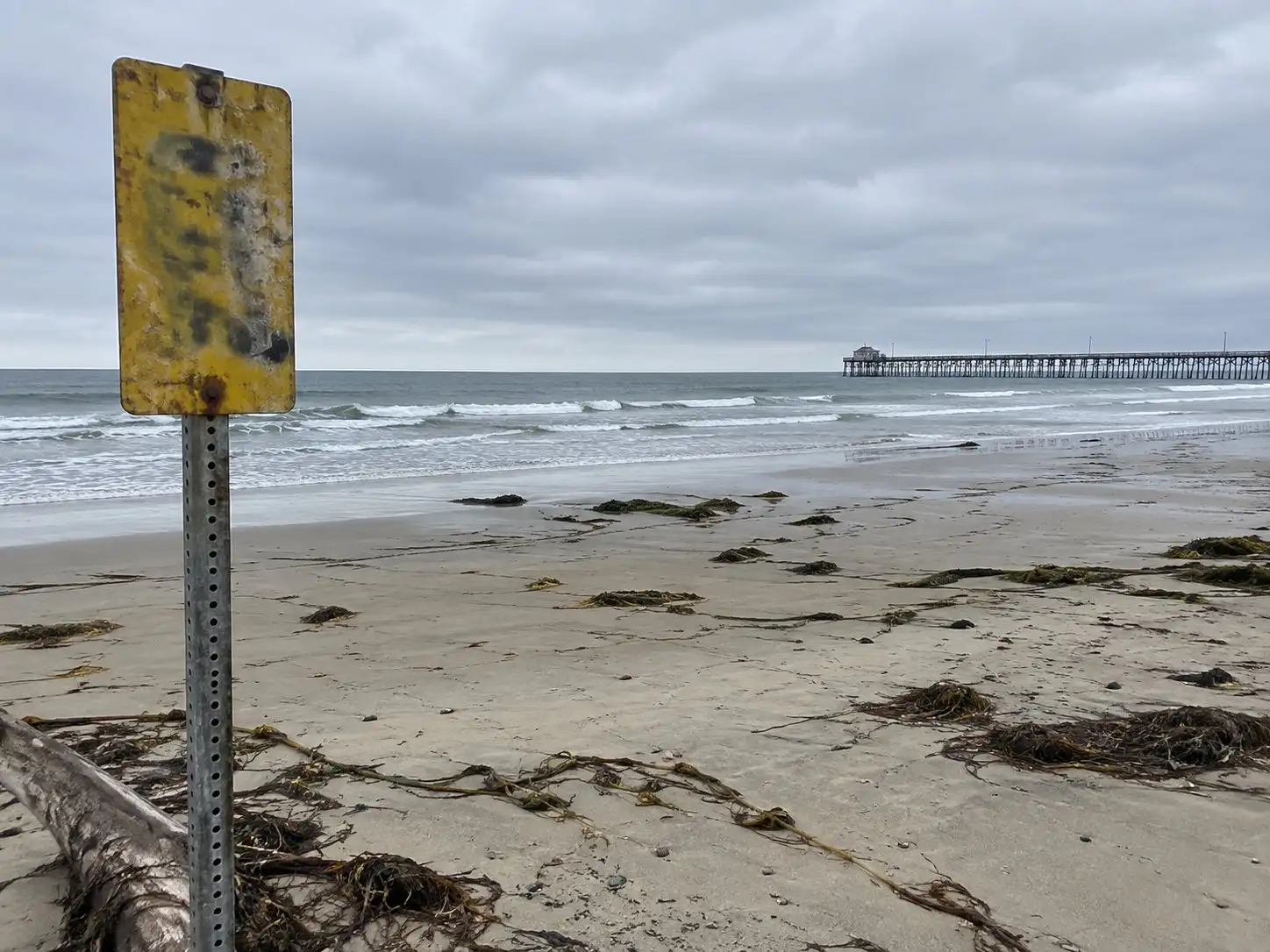
Imperial Beach sits at the southern edge of San Diego County, and for years its beaches have been in the news because of cross-border flows in the Tijuana River. If you are buying or selling here, the practical questions are narrow: where the official status is published, what the agencies themselves say, and what your disclosure and due diligence duties look like.
This page is about process and public records. It does not make health claims and it does not predict prices, because neither belongs in a general explainer and neither is something an agent can promise.
Who publishes closure and advisory information?
The County of San Diego publishes beach and bay water quality status, and the City of Imperial Beach publishes its own page on the issue. The county’s public beach status site is reached at sdbeachinfo.com, which forwards to a county web address.
Those two sources do different jobs. The county’s site is where current status is posted. The city’s page, titled Tijuana River Pollution, is mostly a collection of the city’s letters and documents addressed to state and federal officials. When the city page was reviewed for this article, it did not say where to check today’s status, so use the county for that.
What does the city say about how long the closures have run?
The city has published a figure for consecutive days of closure, and it should be quoted the way the city gives it. The page at imperialbeachca.gov/644/Tijuana-River-Pollution carries a document titled “TJRV Pollution Crisis Reaches 1000 Days of Consecutive Closures,” dated September 3, 2024.
That is a figure the city stated on that date. It is not a live counter, and this article does not update it. If you need a current number, look at what the city and county post now. Any number you see in a listing, an ad or a social post that is not attributed to one of those sources should be treated as unverified.
How do you check current beach status?
Start at the county’s beach water quality site, the one sdbeachinfo.com forwards to, and look at the date on every entry. Read how the county itself labels its categories, because the terms an agency uses have specific meanings and are not interchangeable in everyday speech. A closure and an advisory are different labels, and the county’s own definitions are the only ones that count.
Check on the day you view the home and again during escrow. Status can change from one week to the next, and a screenshot in an email chain goes stale fast. If you are relocating from out of the area and cannot visit, ask your agent to send you the county page rather than a paraphrase.
What have the federal agencies said they are doing?
The U.S. Section of the International Boundary and Water Commission, known as the USIBWC, operates the South Bay International Wastewater Treatment Plant in San Diego. On its site the agency describes expanding that plant’s capacity by 10 million gallons per day, and presents the expansion as a milestone completed in 100 days. The same page says the work is being carried out alongside wastewater infrastructure improvements in Mexico under a binational agreement called Minute 328.
The USIBWC homepage also points to a later U.S.-Mexico memorandum of understanding and to a document called Minute 333, which it describes as outlining joint efforts on the sewage flows. It also links to an update on an ozone pilot project.
Two cautions apply. First, these are the agencies’ descriptions of their own work, so treat them as statements of what the agencies say they have done and plan to do, not as findings about outcomes on any given beach. Second, projects change. Read the current USIBWC and EPA pages directly, note the date on each, and do not rely on an article, including this one, for the current state of construction.
What does a seller need to disclose?
Sellers of one-to-four unit residential property in California must give the buyer a Real Estate Transfer Disclosure Statement. The form is set out in Civil Code section 1102.6, which says the required disclosures “shall be made on a copy of” the statutory form. The broader group of statutes that governs it is the Civil Code 1102 series.
The form asks what you know about your property. It is a standard form, so it does not name a river, a beach or a city, and it is not a place to write an opinion about the area. A useful test is to ask two things. What does the seller actually know that affects this property or how someone would use it? And has anything about that come up in writing, such as a buyer’s question, an inspection note, an HOA notice or a permit record?
Whether a particular condition rises to a material fact you must state is a legal judgment. Your listing agent will have a view, and for an unusual situation a real estate attorney is the right person to confirm it. Our seller disclosure guide covers how the form works in general. Two habits help whatever the answer turns out to be. Answer every question on the form, and keep your own records dated so you can show what you knew and when.
What should a buyer ask?
A buyer’s best tool is a specific question put in writing to the seller’s agent. Ask what the seller knows about anything affecting use of the property, and ask to see any documents the seller has that relate to it. Then check the public sources yourself, because you should not have to rely on anyone’s recollection.
A reasonable set of questions is short. Ask where the official closure and advisory status is posted, and read it directly. Ask whether the seller has received any notices from the city, county or an association that relate to conditions in the area. Ask whether any improvement on the property, such as a deck, an outdoor room or an addition, was permitted. Ask your agent to pull the natural hazard disclosure report and read what it does and does not cover, since that report addresses mapped hazard zones and is a different document from the seller’s own statement.
If you plan to use the property in a particular way, say so and ask what records exist. A general inspection also helps, and a pre-listing inspection is one way a seller can put the physical condition of the home on paper before a buyer starts asking.
Keeping it simple during escrow
Put the county and city links in your file on day one. Save dated copies of anything you rely on, including the county page and any federal page you read. Ask questions in writing and keep the replies. If something changes between contract and closing, tell the other side’s agent promptly in writing rather than hoping it will not matter.
The short version
Imperial Beach beach status is published by the County of San Diego, the city has stated a consecutive closure figure that was dated September 3, 2024, and the federal agencies describe their own plant expansion and binational work on their own sites. Check each source on the day you need it. Sellers disclose what they know on the standard form and ask their agent about anything unusual, and buyers ask specific questions in writing and read the records themselves.
If you are thinking about selling and want a starting point before a conversation about your own home, try the home value tool.
Common questions
Where do I check whether an Imperial Beach beach is closed today?
Use the County of San Diego's beach water quality site, which sdbeachinfo.com forwards to on a county web address. Status changes, so a date in an article, including this one, is not a substitute for checking the county's page on the day you look.
Do I have to disclose beach closures if I sell in Imperial Beach?
California's disclosure rules turn on what you actually know about the property and material facts affecting it. Public closures are a matter of public record, but whether a specific item belongs on your forms is a question for your agent and, if needed, a real estate attorney. Do not answer it by guessing.
Does the Transfer Disclosure Statement mention the Tijuana River?
The statute sets out a standard form that every seller uses, and it does not name individual places. What goes on it is your own knowledge of the property. Ask your agent to walk the neighborhood-conditions questions with you line by line.
Can I find out what the federal government is doing about it?
Yes. The U.S. Section of the International Boundary and Water Commission and the U.S. EPA both publish updates on their own sites. Read them there, dated, rather than relying on a summary written months ago.
