



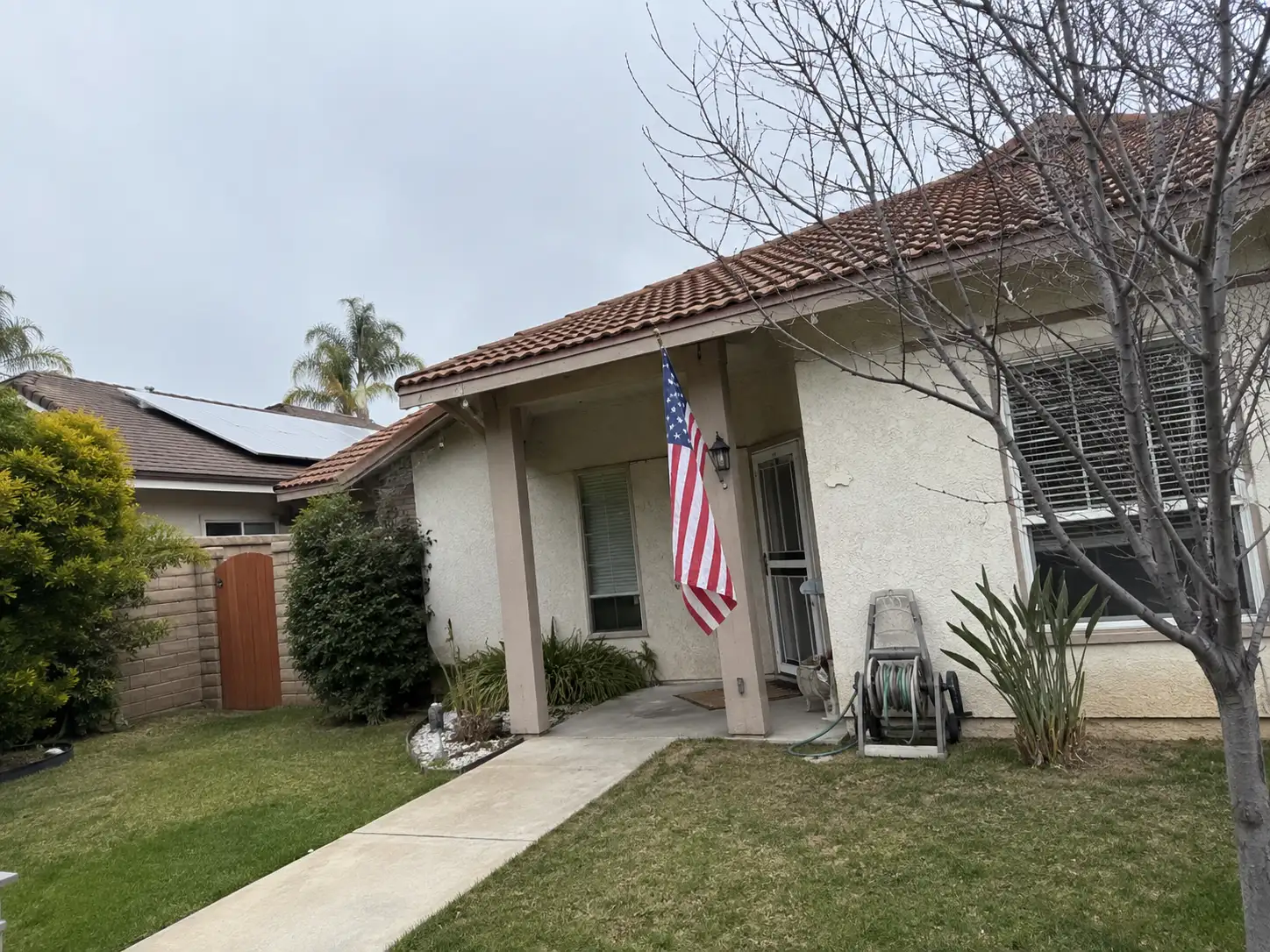
If you are buying a remodeled Ojai home or planning an addition before selling, FlexPath raises a practical question: does this work bring energy upgrades into the permit?
It can, but every remodel does not qualify. Ojai’s rules concern existing single-family homes and use project size, work type, permit timing and exceptions to determine coverage. A covered project starting at 300 square feet needs energy-performance points plus applicable mandatory measures. That does not mean you must convert the whole home to electricity.
By the time we reached the hallway, P. had pulled up the permit records for the remodeled Ojai home. The finished rooms had caught their attention, but they wanted to understand whether the work’s compliance could be demonstrated. I went through the records with them, looking for the application date, scope of work and compliance documents. Those were details our walkthrough couldn’t supply, and the listing’s description of the home as remodeled didn’t answer the concern. I kept our review centered on whether compliance for the existing improvements could be demonstrated to the chief building official.
When does an Ojai remodel trigger FlexPath?
FlexPath applies to qualifying additions and alterations under Ojai Municipal Code section 9-1.701, with local standards applying to building-permit applications submitted on or after January 31, 2026.
The city’s FlexPath page describes a program for existing single-family homes, identifying medium and large additions and renovations as the trigger. The current municipal code supplies the definitions and exceptions that control an individual project.
A major addition increases conditioned floor area by at least 300 square feet in a one-year period. A major alteration is construction or renovation other than a repair whose altered components cover at least 300 square feet in one year. Work consisting only of roof or window replacement is not a major alteration.
For a combined addition and alteration, coverage begins when the altered components total at least 300 square feet. Before plans are final, ask Building and Safety to classify your project and confirm the one-year area calculation. Your project’s classification remains uncertain until its scope and applicable exceptions are checked for the address.
How many points does your project need?
A covered project from 300 through 999 square feet needs at least eight points, while a covered project of at least 1,000 square feet needs at least 19 points.
Both categories must also include all applicable mandatory measures. Reaching the point target does not replace those requirements.
The points come from Table 150.0-I in the current code. Ojai combines these area thresholds with a weighted menu, so different improvements contribute different amounts toward compliance.
For your permit documents, keep the project classification, area calculation and selected measures together. Verification of installed measures must be included as an addendum to the applicable Title 24 Certificate of Compliance.
If you are buying a recently remodeled home, check the permit history and application date against the current effective date. The description of a home as “remodeled” does not establish which requirements applied to its work. The Learn guide to unpermitted work disclosure in California provides related context for reviewing work and its documentation.
Does the menu require full electrification?
The FlexPath menu does not require one all-electric package, and a non-electrification compliance path must remain available.
The city describes choosing “from a list of measures for increasing energy performance.” Its current menu assigns points to insulation, ducts, windows, appliances and other improvements:
| Menu measure | Points |
|---|---|
| Water-heating package | two |
| Induction cooktop | one |
| Heat-pump clothes dryer | one |
| Air sealing | one |
| Duct sealing | three |
| R-49 attic insulation | five |
| Qualifying windows | five |
| R-15 wall insulation | three |
| New ducts plus duct sealing | seven |
| R-19 floor insulation | one |
| R-30 floor insulation | two |
| Heat-pump water heater replacing gas | 12 |
| Heat-pump water heater replacing electric resistance | five |
| Solar photovoltaic system plus electric-ready prewire | 17 |
| Heat-pump space heater | seven |
These are menu values, not a determination that a particular product or installation qualifies. Use the code’s measure requirements when documenting your selection.
Already-installed menu measures can receive credit when compliance can be demonstrated to the chief building official. An inventory of documented prior work is therefore a useful starting point. If solar is part of the property review, the separate guide to selling a house with a solar lease addresses that related subject.
Which mandatory measures apply?
Mandatory measures apply according to their individual triggers and exceptions, rather than as an identical package for every covered project.
M1 requires applicable electric-ready prewire when the project includes a kitchen, laundry room or utility-room remodel, subject to the listed exceptions. A kitchen remodel therefore calls for a separate readiness check alongside the point selection.
M2 applies when the project includes both a new electrical panel and a service upgrade to at least 200 amperes. It requires water-heating and space-heating readiness, subject to the code’s infeasibility language.
M3 requires lighting rated at least 45 lumens per watt in interior and exterior screw-in fixtures. It also requires specified controls for outdoor lighting mounted on a residential building or another building on the same lot.
Put the applicable mandatory measures into the design and Title 24 documents before permit submittal. A point total alone does not show whether these requirements have been addressed.
When does electric-vehicle readiness enter the picture?
Section 150.0(x) adds electric-vehicle readiness requirements when a project includes a parking addition or electrical-panel upgrade.
It requires reserved breaker space and electrical capacity for one Level 2 electric-vehicle charging receptacle. If a second parking space is provided, that space must have a Level 1 receptacle.
The section also contains a separate ADU/JADU exception and panel-upgrade rule. An ADU-related exception elsewhere in FlexPath does not establish that every electrical-readiness requirement is waived.
For an addition that includes parking, or work involving a panel change, ask Building and Safety to confirm how section 150.0(x) applies to the submitted scope. If your project also involves an accessory dwelling unit, read the Learn guide to ADU rules alongside the address-specific city review.
Which homes and projects have exceptions?
The code lists exceptions based on the home, location and work involved, including single-family homes built after December 31, 1991.
Other listed exceptions include:
- A repair as defined by Title 24.
- Work consisting only of seismic and fire-hardening improvements.
- Temporary buildings.
- Roof-only or window-only alterations.
- Mobile, manufactured or factory-built housing.
- Properties outside climate zone 9.
- Qualifying ADUs, JADUs and city-permitted tiny houses.
The historic-property exception has a narrower condition. It concerns a city landmark or contributing historic-district structure when improvements would impair a character-defining element, with the determination made by Community Development under the cited standards. Historic status alone does not establish an exemption from everything.
Start by confirming that the address is within Ojai city limits and climate zone 9. Then check the home’s construction date, project scope and relevant exception language with the city. Keep any address-specific determination with the permit records, particularly if the property will be sold.
What happens if compliance is too costly or infeasible?
An applicant may request an exemption if compliance costs exceed one fifth of total project valuation or project-specific conditions make every available package technically infeasible.
The applicant carries the burden of supporting that request. The building official and Community Development Director determine the minimum feasible compliance threshold. The request itself does not establish an exemption.
An applicant may appeal the exemption or compliance determination to the Building Appeals Board at no fee. These provisions appear in the current code’s compliance and exemption rules.
For a seller, retain the city’s determination and supporting compliance records with the property’s permit documents. Those records belong in the same review as other information about completed work. The California seller disclosure guide is a related resource when preparing for that review.
The short version
An Ojai remodel can trigger FlexPath when its permit timing, scope and area meet the code’s requirements and no applicable exception removes that obligation.
For covered work, the key thresholds are 300 square feet for an eight-point target and 1,000 square feet for a 19-point target, plus all applicable mandatory measures. Existing qualifying improvements can receive credit with documentation accepted by the chief building official.
Before submitting plans, confirm the area calculation, point selection, readiness requirements and verification documents with Building and Safety. Before buying a remodeled home, check its permit application date and compliance records.
For a separate look at your property’s value, use the home value tool.
Common questions
Does every Ojai remodel trigger FlexPath?
No. The permit date, project type, area calculation and exceptions determine coverage. Current section 9-1.701 applies to building-permit applications submitted on or after January 31, 2026.
How many FlexPath points does a covered project need?
A covered project from 300 through 999 square feet needs at least eight points. A covered project of at least 1,000 square feet needs at least 19 points. All applicable mandatory measures also apply.
Does FlexPath require an all-electric home?
No. The weighted menu preserves a non-electrification compliance path. The selected measures and applicable mandatory requirements still need to satisfy the code.
Can existing energy improvements count?
Already-installed menu measures can receive credit when compliance can be demonstrated to the chief building official.
Is a hardship exemption automatic?
No. An applicant may request an exemption when compliance costs exceed one fifth of total project valuation or every available package is technically infeasible because of project-specific conditions. City officials determine the minimum feasible compliance threshold.
