



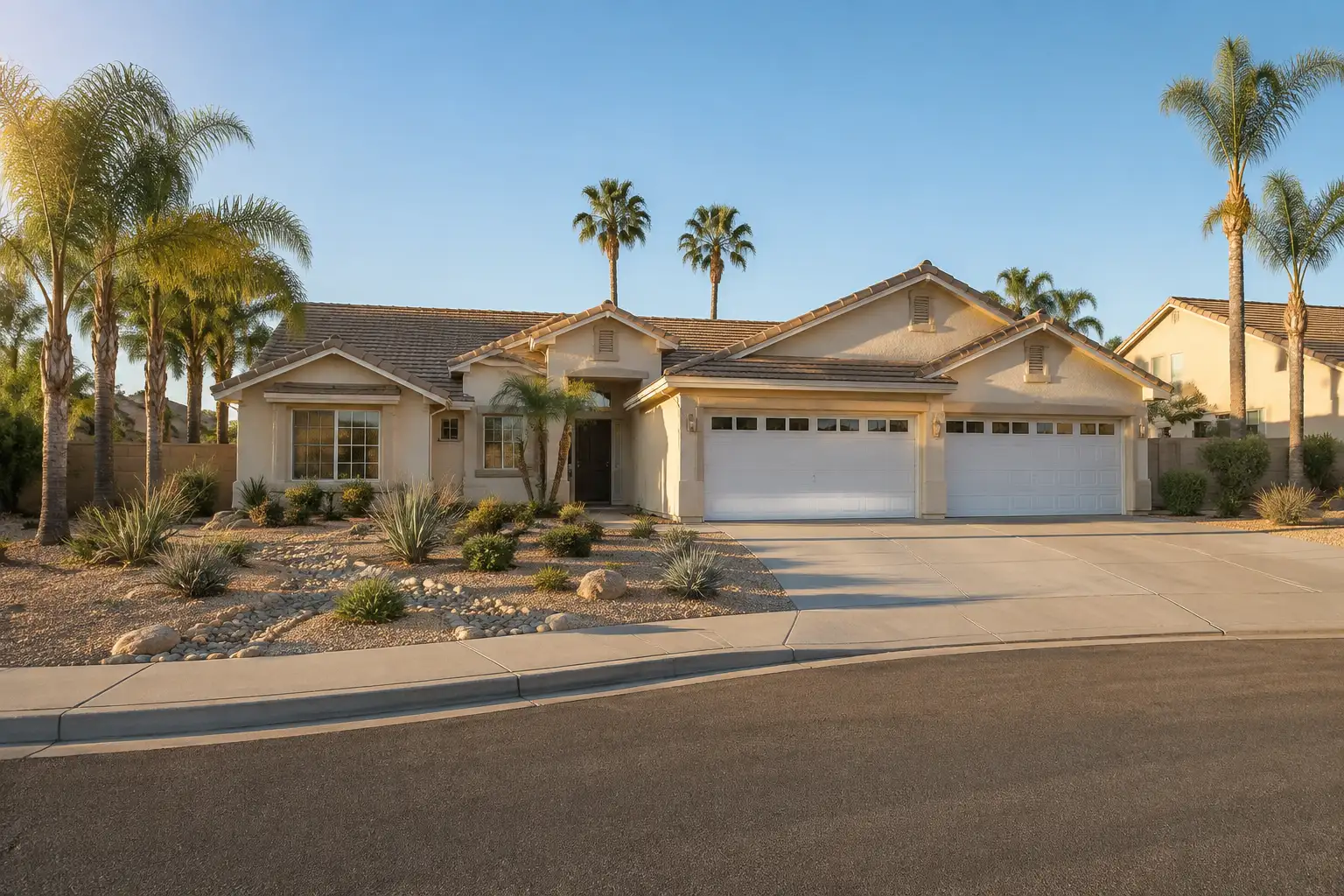
You may be looking at a Perris home and wondering whether Measure C adds a tax to the property. According to the City of Perris, it does not. The measure proposed a business license tax on certain large non-ecommerce industrial, warehouse, and manufacturing facilities, not a property tax or a tax on residential properties.
That distinction matters, but it does not answer every question a buyer may have about a home near industrial land. Measure C concerns city revenue. Warehouse siting, truck routes, noise, land use, and property-specific taxes are separate subjects.
This is general information and not legal advice.
What did Measure C propose?
Measure C proposed a business license tax of up to 10 cents per square foot on qualifying facilities in Perris.
Its full title is the “Perris Distribution Facilities, Industrial Business and Truck Yards Tax Measure.” It appeared on the November 3, 2026 ballot and required a simple majority of those voting for approval. The city’s page title and headings identify it as Measure C.
Annual increases would be limited by a cap tied to the Consumer Price Index. The City of Perris Measure C page estimates that the tax would produce approximately $2,523,877 each year. The ballot question uses a rounded estimate of approximately $2,500,000 annually until voters end it.
As of November 4, 2026, the day after the election, the City’s page did not show a result. Riverside County certifies results. Check the Riverside County Registrar of Voters, the office identified by the city as conducting the election, and the City’s Measure C page for the certified outcome.
If the measure did not pass, the city says the tax would not take effect and Perris would continue relying on existing General Fund revenue.
Which facilities would pay the tax?
The tax would apply strictly to qualifying non-ecommerce facilities with large truck activity and over 50,000 total square feet.
The city identifies three covered categories: industrial, warehouse, and manufacturing facilities. Its page describes the payer as the qualifying warehouse operator. It does not establish, in the material reviewed here, whether that operator is a property owner or a tenant, so buyers should not assume which party would hold that role at a particular site.
The city’s page says Perris has over 30 million square feet of warehouse and industrial facilities operating within city limits. Another part of the page refers to maintaining the impacts of more than 25.5 million square feet of industrial area. Those are two different totals on the same page. The page does not explain the difference.
Why were ecommerce facilities excluded?
Ecommerce facilities were excluded because the city says many of them direct sales to Perris and generate local sales tax.
The City’s page contrasts those operations with non-ecommerce warehouses, which it says generate no sales tax for Perris. That is the city’s stated basis for focusing the proposed business license tax on non-ecommerce facilities.
On the page, an “e-commerce facility” means a business operation or facility principally used to receive, store, process, pick, pack, handle, stage, or ship goods ordered by end consumers through an online or electronic commerce platform for direct delivery to those consumers.
Where would the revenue go?
All Measure C revenue would go to the City of Perris General Fund.
The City’s page lists possible uses that include repairing streets and potholes, 911 police, fire and emergency response, traffic flow and pedestrian safety near industrial corridors, small business retention, and local parks. The page presents these as services the money could support.
The City Council would direct spending during annual public budget hearings. The page also says all of the revenue would remain in Perris and could not be seized or redirected by the state, county, or another agency.
Measure C is separate from Measure B. Perris voters approved Measure B in June 2026 to support general city services through a local transactions and use tax. According to the Measure C page, residents raised concerns about warehouse truck traffic during Measure B outreach.
Does Measure C add a cost to buying a home?
Measure C does not add a city tax to a residential property, according to the City’s page.
The city says it would not be a tax on residents or home property owners. It also says Measure C is not a property tax, is not a sales tax on consumers, and does not apply to residential properties or traditional small local businesses.
That does not support a prediction about sale prices, rents, property taxes, or future home values. The city material reviewed for this guide does not say that the measure would raise or lower any of them. It also does not say that the tax would change truck traffic or explain how qualifying operators might respond.
For costs that can be connected more directly to a California purchase, review the separate guides to the supplemental property tax bill and Mello-Roos. Those topics should not be confused with this proposed business license tax.
A Perris buyer asked us whether Measure C would appear as a new assessment on the property-tax bill. He had heard that homeowners would help fund the measure but did not know how the revenue was collected. We reviewed the measure’s actual funding mechanism with him instead of assuming every voter-approved charge is a parcel tax.
How does Measure C relate to warehouse impacts?
Measure C addresses city revenue associated with qualifying warehouse operations, not the rules for locating or operating a warehouse.
The city’s page lists traffic flow and pedestrian safety near industrial corridors among the possible uses of General Fund revenue. It also says outreach for Measure B brought up concerns about warehouse truck traffic. Neither statement means Measure C changes a truck route, approves a project, creates a buffer, or alters land-use requirements.
A buyer evaluating a particular location should examine the property and surrounding approvals separately. The Insider guide to buying near Perris warehouses explains how to check Planning Commission current projects and California AB 98 buffer rules. If a property is also affected by aviation planning, the guide to Perris homes near March ARB noise and accident zones covers that distinct issue.
What financial oversight did the city describe?
The city described public disclosures, independent audits, and public spending reports for Measure C revenue.
Its page calls for mandatory public financial disclosures and annual independent audits. Spending would also be discussed through annual public budget hearings, where the City Council directs the use of General Fund money.
These controls describe how the city says revenue would be reported and reviewed. They do not dedicate a specific amount to any one listed service.
For questions about the measure, the city printed [email protected] and 951-943-5537 on its Measure C page.
The short version
Measure C was a proposed Perris business license tax on qualifying non-ecommerce industrial, warehouse, and manufacturing facilities with large truck activity and over 50,000 total square feet.
The city says it is not a property tax and does not apply to residential properties. Revenue would go to the General Fund, where the City Council would direct spending at annual public budget hearings.
As of November 4, 2026, the City’s page did not report whether the measure passed. Check the Riverside County Registrar of Voters and the City’s Measure C page for the certified result.
If you’re comparing this measure with the property-specific factors that may shape a sale decision, start with the home value tool.
Common questions
Is Perris Measure C a property tax?
No. The City's Measure C page says it is not a property tax and does not apply to residential properties.
Which Perris facilities would be subject to Measure C?
The city says it would apply to non-ecommerce industrial, warehouse, and manufacturing facilities with large truck activity and over 50,000 total square feet.
How much would the Measure C tax be?
The proposal allows a business license tax of up to 10 cents per square foot, with annual increases limited by a cap tied to the Consumer Price Index.
Where would Measure C revenue go?
All revenue would go to the City of Perris General Fund, with the City Council directing its use during annual public budget hearings.
Did Perris Measure C pass?
As of November 4, 2026, the City's page did not show a result. Check the Riverside County Registrar of Voters and the City's Measure C page for the certified outcome.
