



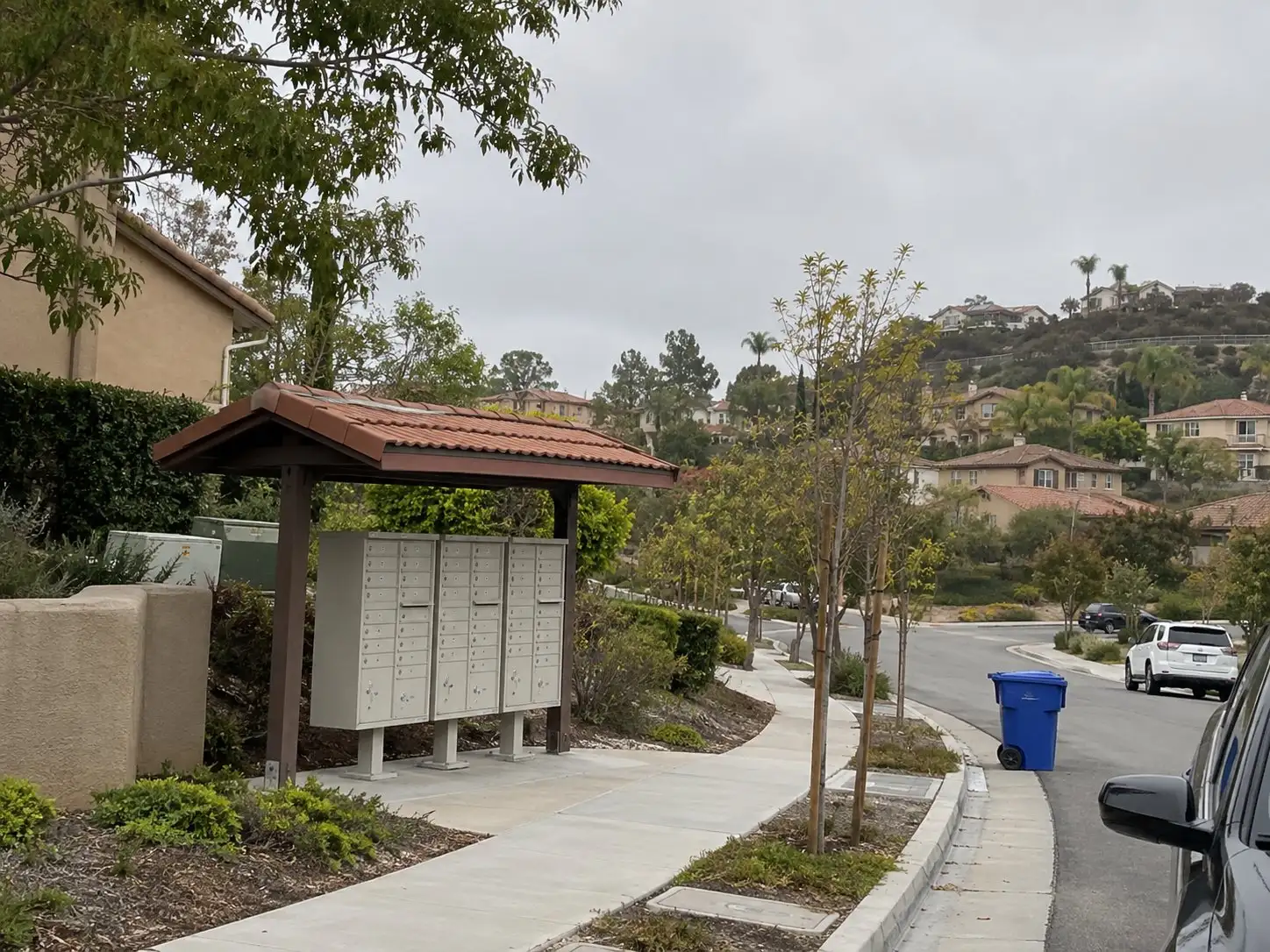
A house in San Elijo Hills and a house in an older San Marcos neighborhood can list for the same price and still carry very different monthly obligations once you look past the mortgage. The difference usually comes down to two things: whether the home sits in a Community Facilities District, and whether it belongs to a homeowners association. Both are common in San Elijo Hills. Neither is guaranteed, or guaranteed absent, anywhere else in the city.
What San Elijo Hills actually is
San Elijo Hills is a master-planned community built on roughly 1,921 acres in San Marcos, according to HomeFed Corporation, the developer behind it. HomeFed’s own project page describes it as an award-winning master-planned community of about 3,400 homes, ranging from condos to single-family estates, built around a 70-acre town center with schools and retail, more than 1,100 acres of permanent open space, and about 18 miles of hiking and biking trails. The community welcomed its first residents in 2000, and HomeFed describes the residential build-out as complete after roughly two decades of construction.
That scale and timeline matter here because a development built as one large, financed project tends to carry the financing tools that come with it: an association to run the shared amenities, and often a special tax district to pay for the roads, sewers and parks that went in before anyone moved in.
HOA and master association dues, and what you are owed
If a home is inside San Elijo Hills, it is very likely subject to an HOA or a master association, sometimes both, layered as a community-wide association plus smaller sub-association for a specific neighborhood within it. Under Civil Code section 4525, a seller in any California common interest development has to give the buyer a defined set of documents before closing: the governing documents (CC&Rs and bylaws), the current budget or a summary of it, the most recent reserve study or a summary of the association’s reserve funding, a written statement of any assessments, unpaid fees or liens tied to the specific property, and a summary of the association’s insurance coverage. The HOA disclosure guide covers this document list and the 10-day clock the association is on once a seller requests it in writing, which applies here exactly the same way it applies anywhere else in California.
Dues, reserve health and any pending special assessment are association-specific. Two properties in different pockets of San Elijo Hills, under different sub-associations, can carry different monthly dues even a few streets apart. Read the actual CC&Rs and budget for the specific property rather than going by what a neighbor pays.
The other layer: Mello-Roos and Community Facilities Districts
Separate from any HOA, a Community Facilities District is a special tax authorized under the Mello-Roos Community Facilities Act of 1982, collected as its own line item on the property tax bill to repay bonds or fund services for a defined area. It is not a percentage of the home’s value. It is set by a formula adopted when the district formed, usually tied to lot size, home size or land use category, so two comparable homes in different phases of the same community can owe different amounts. Mello-Roos, explained covers how these districts get formed and what the state law actually allows them to fund, and how much Mello-Roos adds to a Murrieta tax bill walks through the same kind of parcel-level lookup in a neighboring market, using the same method described below.
San Elijo Hills’ own district
The City of San Marcos lists a Community Facilities District named CFD 99-01 as the San Elijo Hills district, among the roughly ten CFDs the city has formed over the years for different areas and purposes. The San Diego County Auditor and Controller’s active Mello-Roos district list, published annually, shows CFD 99-01 broken into several separate fund numbers tied to different improvement areas, labeled things like Improvement Area A1, B1, B2, C1, C2B, D1 and D3. That pattern usually means the community was built and financed in phases, with each phase’s parcels carrying their own version of the tax rather than one flat number for the whole community.
That is useful context, but it is not a substitute for reading one parcel’s own bill. Whether you are looking at a home near the town center or one in a later phase further up the hill, the improvement area code on that specific tax bill is the only thing that tells you what that house actually owes.
How to find out if one San Marcos parcel is in a CFD
Start with the city. The City of San Marcos CFD and Mello-Roos page lists every active district by name and number, with contact information for the CFD administrator. It tells property owners to check the Fixed Charge Assessments section of their current property tax bill for a line item labeled CFD, then match that entry against the city’s list.
From there, two more sources confirm it. The county Auditor and Controller publishes an annual list of active Mello-Roos districts by agency, fund number and description, which is where the San Elijo Hills improvement area breakdown above comes from. And the San Diego County Treasurer-Tax Collector’s site lets you search a specific bill by Assessor Parcel Number or by address, which is the fastest way to see the actual dollar figure on a specific house rather than a district-wide range.
If a specific tax bill isn’t in hand yet, ask the seller or the listing agent for the most recent year’s bill. It shows the CFD line item directly, along with the fund number that ties it back to the city’s list.
The older parts of San Marcos
Not every San Marcos neighborhood carries a CFD or an association. The city’s active district list includes districts tied to specific developments (Paloma and Santa Fe Hills, Twin Oaks Valley Ranch, San Elijo Hills, University Commons) alongside a few citywide districts for police, fire and lighting services. A home outside those named development areas, especially one built before these financing tools became standard for new subdivisions, is less likely to carry either obligation. Less likely is not the same as certain. The only way to know for a specific address is to check its tax bill and, if the listing mentions an association, request the HOA documents the same way you would in San Elijo Hills.
The seller’s duty to disclose the Mello-Roos tax
If a property is subject to a Mello-Roos special tax, the seller does not get to leave it for the buyer to discover. Under Civil Code section 1102.6b, a seller has to make a good faith effort to obtain the official Notice of Special Tax from the local agency that levies the tax and deliver it to the buyer. The agency, in turn, is separately required to provide that notice to anyone who requests it. This duty sits alongside, not instead of, the standard Transfer Disclosure Statement and the HOA document package required under Civil Code section 4525 when an association is involved. The seller disclosure guide covers where both obligations fit into the full disclosure packet a California seller has to assemble.
Reading the two costs together
An HOA payment and a Mello-Roos line item both add to the real monthly cost of owning a specific home, and neither one shows up in a listing price. Before writing an offer on a San Elijo Hills property, or pricing one to sell, get the current dues amount and reserve status from the association and the current CFD line item from the tax bill, then add both to the mortgage payment you are actually comparing against other homes. A house in an older San Marcos tract with neither cost can carry a lower true monthly payment than a similarly priced home in a newer master-planned area, even with an identical loan.
The short version
San Elijo Hills is a large master-planned community, built out to roughly 1,921 acres and about 3,400 homes since residents first moved in around 2000, and most of it carries both HOA or master association dues and a Mello-Roos special tax under CFD 99-01. Older parts of San Marcos are less likely to carry either, but that has to be confirmed parcel by parcel, not assumed by neighborhood. Check the current tax bill for a CFD line item, request the HOA disclosure packet if an association applies, and read the seller’s Notice of Special Tax before you treat the listing price as the whole cost.
To see how these carrying costs affect what a specific San Marcos home is actually worth, start with the home value tool.
Common questions
Does every home in San Elijo Hills have a Mello-Roos tax?
Most do. The City of San Marcos lists CFD 99-01 as the San Elijo Hills Community Facilities District, and the county Auditor and Controller's active district list shows it broken into several improvement areas with their own fund numbers, which usually means different phases of the community were taxed under slightly different terms. The only way to confirm one specific parcel is to read its own tax bill.
How do I check whether a San Marcos home is in a CFD?
Pull the current property tax bill and look in the Fixed Charge Assessments section for an entry labeled CFD, then compare that fund number against the City of San Marcos CFD and Mello-Roos page. You can also search the parcel by Assessor Parcel Number on the San Diego County Treasurer-Tax Collector's site to see the current bill directly.
Does San Elijo Hills have an HOA in addition to the Mello-Roos tax?
Yes, and they are two separate obligations. The Mello-Roos special tax rides on the property tax bill and funds infrastructure or services approved when the district formed. HOA or master association dues are billed separately by the association and cover shared amenities, common area maintenance and reserves.
What does a San Marcos seller have to tell a buyer about Mello-Roos?
Under Civil Code section 1102.6b, the seller has to make a good faith effort to get the official Notice of Special Tax from the levying agency and hand it to the buyer. Separately, under Civil Code section 4525, a seller in an HOA has to provide the governing documents, budget, reserve study and an assessment statement.
Are older parts of San Marcos free of Mello-Roos and HOA dues?
Not automatically, but it is less common outside the newer master-planned areas. Older San Marcos neighborhoods built before these financing tools were common are less likely to carry a CFD or an association, but the only reliable answer for any one house is to check its own tax bill and title report rather than assume based on the area.
