



Fallbrook doesn’t have its own city hall or its own fire department badge that says “Fallbrook” on it. It’s unincorporated San Diego County, which means the rules that apply to your sale come from the county and from a fire district, not a city. If you’re selling out here, that distinction matters more than it does in most places, because it changes who inspects your defensible space and who you call when a buyer’s agent starts asking questions.
Is your property actually in a fire hazard zone
Large parts of Fallbrook are, and the honest answer is that you need to check your specific parcel rather than assume. The state’s Office of the State Fire Marshal maintains the Fire Hazard Severity Zone Viewer, the official tool for looking up a property’s designation, and it’s worth five minutes before you list. Fallbrook sits among the unincorporated San Diego County communities that carry Very High designations in significant portions of town, alongside places like Ramona, Julian, and Alpine. The state redid these maps in 2025 for the first comprehensive update since the 2007 to 2011 round, and some properties that previously carried no designation or a lower one now show High or Very High. If you haven’t checked since an older map, check again.
Your zone also shows up on paper during the sale itself. The Natural Hazard Disclosure statement, required under Civil Code section 1103.2, asks the seller to state whether the property is in a High or Very High Fire Hazard Severity Zone, and to specify whether that’s in a state responsibility area or a local responsibility area. The NHD form is where a buyer first sees the designation in writing, usually delivered through a third-party NHD report provider as part of your disclosure package. Natural hazard disclosure reports walks through the rest of what that report covers beyond fire.
The defensible space report you need before you can close
This is the part that catches Fallbrook sellers off guard. Since July 1, 2021, California law under Civil Code section 1102.19 has required that a seller of residential property in a High or Very High Fire Hazard Severity Zone provide the buyer with documentation of defensible space compliance as part of the sale. Where a local ordinance covers it, and Fallbrook’s does, that means a copy of a compliant Defensible Space Inspection report, current within six months of entering the sales contract.
North County Fire Protection District serves Fallbrook, along with Bonsall and Rainbow, and runs this inspection program under what’s commonly referred to as AB-38. You request an inspection through the district’s Fire Prevention Bureau, and the district’s own guidance says to expect contact within 2 to 3 business days of your request, with the inspection itself typically scheduled 7 to 10 days out. If your property fails, you get a deficiency report telling you what to fix, not a pass, which is exactly why this isn’t something to start the week you go into escrow. Confirm your specific parcel’s jurisdiction and current inspection timelines directly with NCFPD, since a few pockets of unincorporated county fall under other agencies.
If you genuinely can’t get the report in time, the statute has a fallback: buyer and seller can sign a written agreement where the buyer takes responsibility for getting the property inspected, either under the local ordinance or, if none applies, within a year after closing. That’s a real option, but it shifts a known task onto your buyer at the exact moment they’re deciding whether to trust the deal. A passing report beats a promise.
What defensible space actually means on your lot
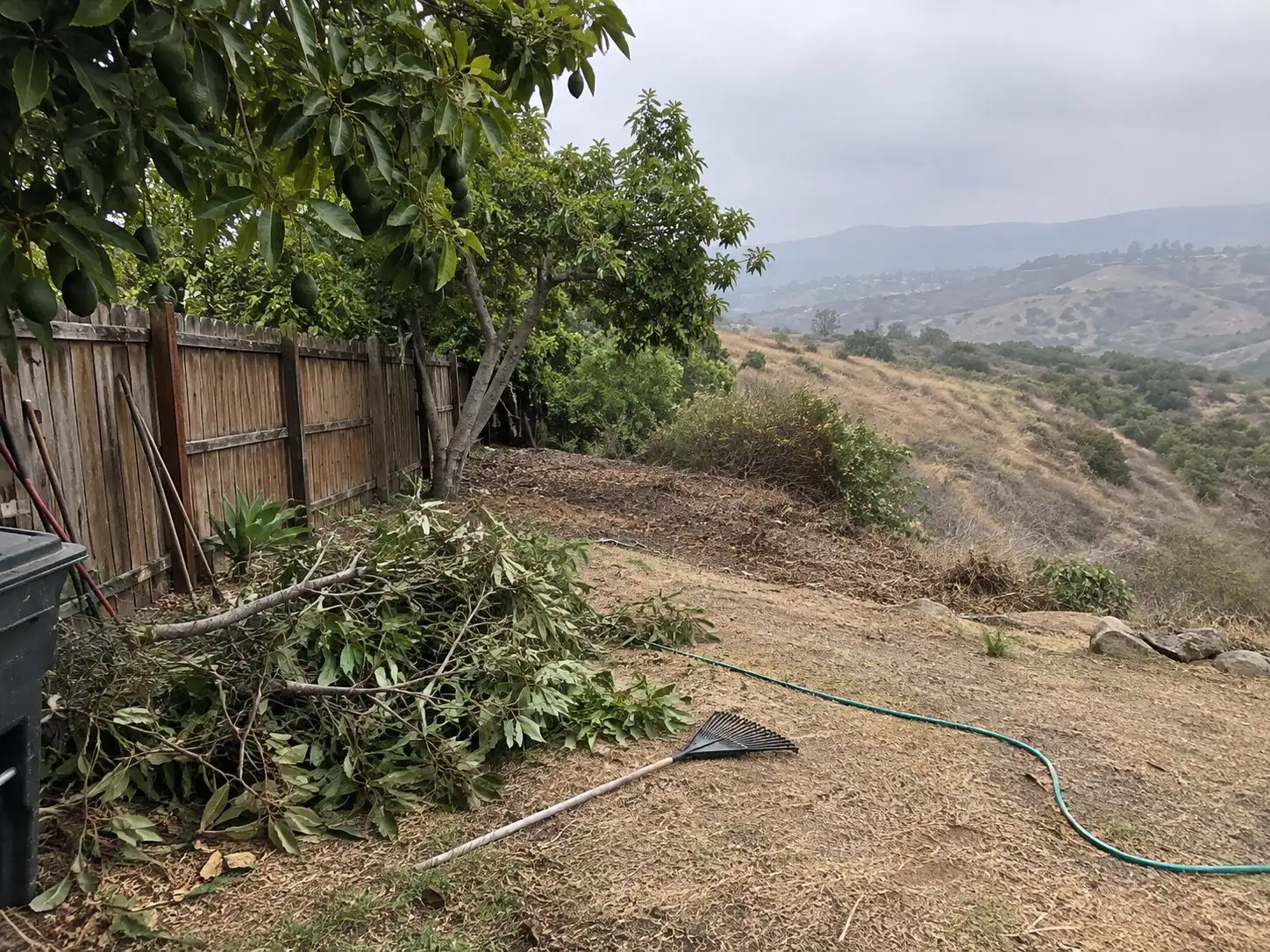
The underlying maintenance requirement comes from Government Code section 51182, which sets up graduated defensible space zones around an occupied structure in a very high fire hazard severity zone. The first 5 feet out from the structure is meant to function as an ember-resistant zone, cleared of the material most likely to ignite from a wind-blown ember. From 5 to 30 feet the law calls for more intensive fuel reduction. From 30 feet out to 100 feet, or to the property line if that comes first, the standard eases but still requires enough clearance that a wildfire is unlikely to reach the structure. The statute also calls out removing dead wood from trees and keeping branches back from chimney outlets.
San Diego County’s own Consolidated Fire Code and defensible space ordinance for unincorporated areas lay out a similar zoned approach on the ground: roughly the first 5 feet as hardscape with nothing combustible, irrigated low-growth fire-resistant planting out to about 50 feet, and managed medium-height planting out to 100 feet with lower tree branches removed. The county’s fire authority can reduce that outer distance to as little as 30 feet in some circumstances. The specifics of your lot, its slope, and what’s growing on adjoining property all factor into whether an inspector signs off, which is one more reason to have someone look before you list rather than during your contingency period. Wildfire hardening and Chapter 7A covers the construction side of this, the roof, vents, and siding that work alongside defensible space to keep embers out of the structure itself.
What a buyer’s inspection and lender will actually ask about
A buyer’s home inspector isn’t going to measure your defensible space zones to the foot, but expect questions about vegetation against the house, what’s under the deck, roof debris, and the vent screens Chapter 7A construction relies on. A buyer’s lender is a different animal. What a lender cares about is whether the home is insurable at all, and that question runs straight into the same wildfire exposure that triggered your defensible space requirement in the first place.
Don’t guess at what your insurer will or won’t write. Ask your current carrier directly whether they’ll continue coverage through a sale, and ask a buyer’s likely lender or insurance agent what evidence they’ll want, a defensible space report, proof of a Class A roof, or something else specific to your parcel’s zone designation. If your home ends up needing the California FAIR Plan because standard coverage isn’t available, California FAIR Plan explains how that program works and what a lender typically needs to see alongside it. My homeowners insurance was non-renewed. Can I still sell my house? covers the disclosure and financing side if you’re already dealing with a non-renewal notice rather than just a fire zone designation.
Building your documentation file before you list
Pull together what a buyer’s side is going to ask for anyway: your current NCFPD defensible space compliance report or a fresh request submitted, your NHD report, current insurance declarations, and any wildfire hardening work you’ve had done with dates and, where you have them, receipts or contractor documentation. If you don’t have a passing DSI report yet, get the request in early. The district’s own stated timeline of roughly two weeks from request to inspection result doesn’t leave much room if you’re trying to close in 30 days and only start asking in escrow.
Disclosure beyond the fire zone box
The Very High Fire Hazard Severity Zone checkbox on your NHD form is a state-mandated disclosure, but it’s not the only thing you’re on the hook for. If you know something specific about your property, past clearing violations, standing dead trees, a fire district deficiency notice you haven’t resolved, that’s a known material fact under California’s general disclosure framework, separate from the NHD checkbox itself. What am I legally required to disclose when selling a house in California walks through that broader standard if you want the full picture beyond fire-specific items.
The short version
Fallbrook is unincorporated county, and North County Fire Protection District is your fire authority for most of town, so that’s who inspects your defensible space and who signs off on the report a buyer legally needs from you before closing if your parcel is in a High or Very High zone. Start that inspection request early, keep your NHD and insurance paperwork current, and ask your insurer and a buyer’s likely lender directly what they need rather than guessing.
If you want a clear number for your specific property before any of this hits a buyer’s desk, start with the home value tool.
Common questions
Does my Fallbrook home need a defensible space inspection to sell?
If it sits in a High or Very High Fire Hazard Severity Zone, California law has required documentation of a compliant defensible space inspection for sales entered into on or after July 1, 2021. For most of Fallbrook, that inspection comes from North County Fire Protection District.
Who is the fire authority for Fallbrook?
North County Fire Protection District serves Fallbrook, Bonsall, and Rainbow. If you're not sure your parcel falls inside that district, confirm with NCFPD directly, since some pockets of unincorporated San Diego County fall under different agencies.
What if I don't have a defensible space compliance report and I'm about to enter a contract?
State law gives you a fallback. If documentation isn't available, buyer and seller can sign a written agreement where the buyer takes on getting the property inspected, either under the local ordinance or within one year of closing if no ordinance applies. Ask your agent and the district which path fits your timeline.
Will my homeowners insurance cover a Fallbrook home in a Very High fire zone?
That is not something a general guide can answer. Ask your carrier or an independent agent directly whether they'll write a new policy on the specific parcel, and ask what mitigation steps, like a documented defensible space inspection, they want to see. If standard coverage isn't available, ask about the California FAIR Plan and what a lender will require alongside it.
