



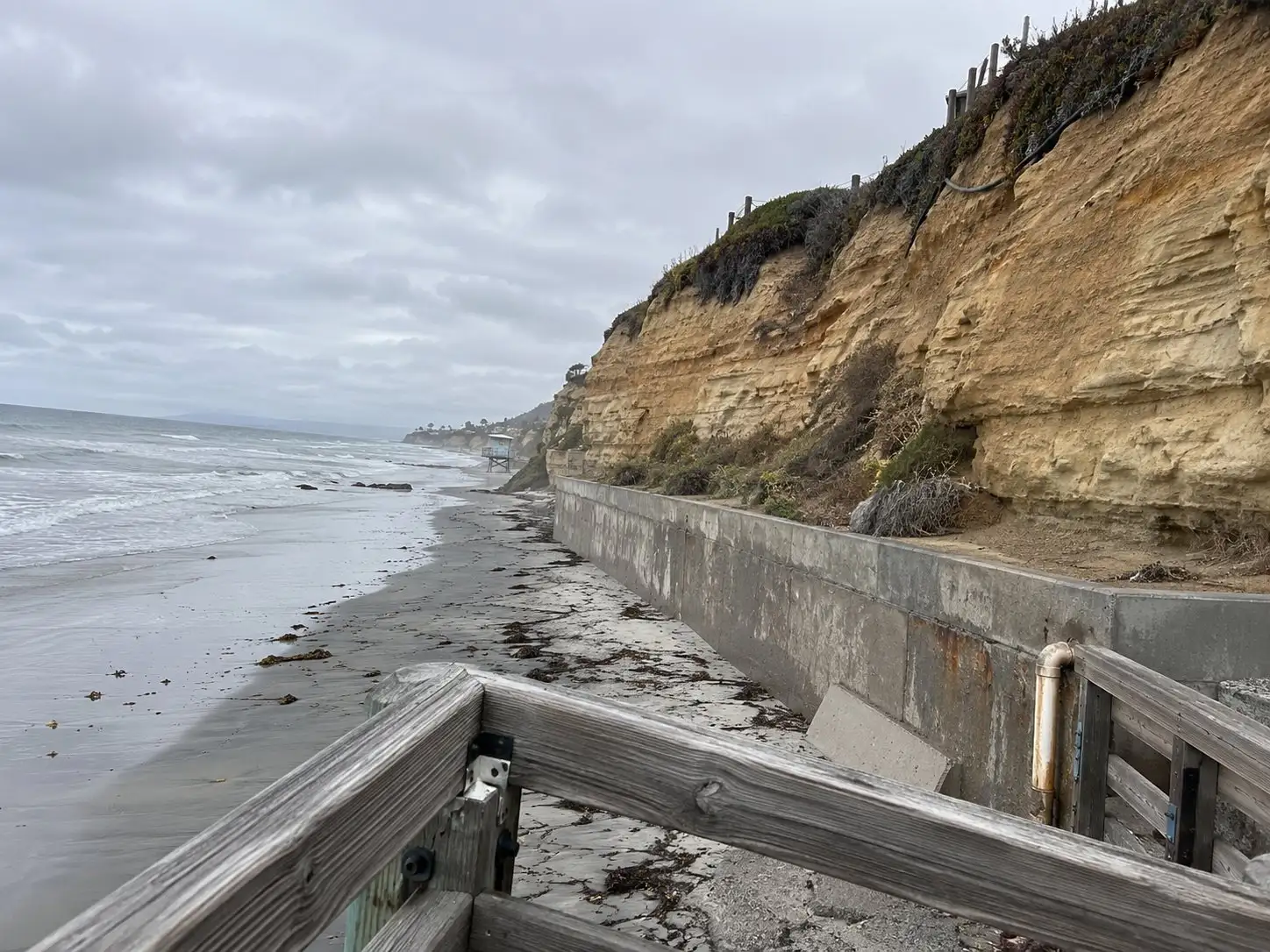
Solana Beach sits on a narrow strip of sand below coastal bluffs, with homes along the tops. The city’s own municipal code describes it that way, and it is the starting point for every rule that follows.
If you own a bluff-top home and plan to sell, the useful question is what you know about your lot, what the city’s rules say about it and what paperwork a buyer’s side will ask for. This page walks through the city’s code, its Land Use Plan and the state disclosure forms. It is general information, not legal or engineering advice.
What does Chapter 17.62 of the municipal code regulate?
Chapter 17.62 of the Solana Beach Municipal Code, titled Shoreline and Coastal Bluff Protection, regulates the structures people build to hold a bluff in place. It covers seawalls, revetments, bluff retaining walls, gunite coverings, armoring, rip rap and seacave plugs or fills, which the code groups together as shoreline defense structures.
The chapter’s findings explain the reason. The city says the narrow beach and lack of a sand buffer leave the bluffs open to wave action, particularly in winter, and that erosion has also come from irrigation practices, storm water drainage, construction activity and climbing. It says such devices, if left unregulated, can individually and cumulatively harm the shoreline, and that the city’s general plan safety element discourages seawalls.
When will the city allow a seawall?
Rarely, and only after a public hearing and findings by the city council. Under SBMC 17.62.020, the city’s policy is to strictly regulate new seawalls and similar structures, and such protection generally will not be allowed when other feasible measures are available. Permits are issued only to protect existing legally built structures threatened with imminent danger from bluff failure, to preserve an economically viable use of the property, or to abate a public nuisance.
SBMC 17.62.080 adds conditions. Among them, no other reasonably feasible method of stabilizing the bluff can protect the structure, the owner has taken reasonable steps by other means, and the owner or prior owners did not create the need by unreasonably failing to put generally accepted erosion and drainage controls in place. For a seller, that last point matters. How a lot has been watered and drained over the years can bear on what protection the city would ever consider. The code carves out one exception: that condition does not apply to a bona fide purchaser who acquired the property without knowledge of the condition that created the need for the device. Whether a given owner qualifies is a question for the city and an attorney, not something to assume.
What do watering and drainage rules mean for an owner?
They set day-to-day standards that apply to the lot whether or not any seawall is ever proposed. SBMC 17.62.160 prohibits automatic irrigation systems within 100 feet of the coastal bluff unless they have automatic shut-off valves and moisture sensors. For lots between the bluff and the first public street, the code requires drainage systems that carry surface water away from the bluff edge, and it prohibits drainage over the edge or through the bluff unless the water is contained in a pipe drainage system approved by the city engineer.
If you are preparing to sell, walk the lot with those two paragraphs in hand. Note what is installed, who installed it and whether a permit exists. A buyer’s inspector will look at the same things.
What does the Land Use Plan add for new building?
The city’s Local Coastal Program Land Use Plan, which the city adopted by resolution in February 2013, adds standards for building near the edge. Chapter 4 of the plan, titled Hazards and Shoreline / Bluff Development, says new bluff-property development must be set back far enough to stay stable over a projected 75-year economic life. A geotechnical report from a licensed geotechnical engineer or certified engineering geologist sets the Geologic Setback Line, using a slope analysis with a minimum factor of safety against sliding of 1.5 static or 1.2 pseudostatic.
In no case may the setback be less than 40 feet from the bluff edge. The plan applies the setback to additions and to accessory structures such as pools, guesthouses, cabanas and septic systems, with at-grade decks, patios and walkways allowed no closer than five feet from the bluff edge. It also says legally permitted bluff retention devices are not counted toward the setback.
This matters when you sell because a buyer who wants to remodel or rebuild will ask what the lot can support. The answer lives in the geotechnical analysis, not in a neighborhood average.
Can a deed restriction limit future seawalls?
Yes, on lots where a permit imposed one. Policy 4.19 of the Land Use Plan says new shoreline or bluff protective devices that alter natural landforms shall not be permitted to protect new development. It says a condition of the permit for all new development and blufftop redevelopment on bluff property shall require the owner to record a deed restriction waiving any future right under Coastal Act section 30235 to new or additional bluff retention devices.
Policy 4.22 adds that no bluff retention device is allowed for the sole purpose of protecting an accessory structure.
If a waiver sits on your title, say so early. If you are not sure, the title report and the city’s permit file for the address are the places to look. For how a neighboring city handles similar questions, see bluff-top rules in Encinitas and the Del Mar bluff erosion guide.
What are the sand and public recreation fees?
They are charges tied to building a bluff retention device, not to owning or selling a home. The Land Use Plan says that for development involving a bluff retention device the city collects a Sand Mitigation Fee, used for beach sand replenishment or retention, and a Public Recreation Fee, in place of providing beach area to replace the public access and recreation lost to the structure. The city’s shoreline management page also links its fee study and says a fee deposit of $1,000 per linear foot has been assessed on new devices pending final fee adoption.
Treat those as background, since the figures can change. Ask the city’s planning counter for the current requirement before relying on any number, including this one. Violations of Chapter 17.62 carry their own penalties: the code makes a violation a misdemeanor and sets a civil penalty of $1,000 per day for building, repairing or maintaining a shoreline defense structure in violation of the chapter.
What does a seller actually have to disclose?
You have to share what you know about the property. California Civil Code section 1102.3 requires the seller of single-family real property to deliver the transfer disclosure statement to the buyer. A geotechnical report, a repair record, a drainage fix near the bluff edge or a letter from the city about the bluff is something you know about, and it belongs in the conversation. The seller disclosure guide covers the form in general.
The Natural Hazard Disclosure is separate. Civil Code section 1103.2 lists six zones: special flood hazard area, dam failure inundation area, fire hazard severity zone, wildland fire area, earthquake fault zone and seismic hazard zone. Coastal bluff erosion is not one of them, so a clean report tells a buyer nothing about the bluff. The NHD report guide explains what that document does and does not cover.
If work near the bluff edge, such as a retaining wall, drainage line, pool or deck, was done without a permit, that is its own issue, covered in the guide to unpermitted work.
How should you prepare before you list?
Gather the paper before a buyer asks for it. Pull the geotechnical or soils report for the lot, permits for any wall, drainage, pool, deck or shoreline work, the title report and any recorded conditions. Confirm with the city where the bluff edge and setback lines fall on your parcel, since the Land Use Plan shows the city’s mapped bluff edge with 25-foot and 40-foot lines. A pre-listing inspection covers the building, but it does not replace an engineer’s view of the bluff.
Zarko Maletin is a Realtor and an InterNACHI certified home inspector, which helps when reading both the house and the paper trail. Neither role substitutes for a geotechnical report.
Describe the lot by its permits and reports, and keep the conversation about records.
The short version
Solana Beach regulates bluff protection through Chapter 17.62 of its municipal code, which allows seawalls only under narrow findings and sets irrigation and drainage standards near the edge. The Land Use Plan adds a geotechnical setback of at least 40 feet for new building and can attach a recorded waiver against future seawalls. The state hazard report does not cover bluff erosion, and a seller has to share what they know about their lot.
If you are weighing a sale and want a starting number before the document work, try the home value tool.
Common questions
Does Solana Beach let a bluff-top owner build a seawall?
Only under tight conditions. Chapter 17.62 of the Solana Beach Municipal Code says the city strictly regulates new seawalls and similar devices, and that they generally will not be allowed when other feasible protection measures exist. A permit requires findings by the city council, including that an existing significant structure is threatened with imminent danger and that no other reasonably feasible method would protect it.
What does "imminent" mean in the city's code?
SBMC 17.62.040 defines imminent as an occurrence that is reasonably foreseeable within 12 months from the time the determination of imminence is made. Under the same section, a significant structure includes a legally existing principal structure, and excludes gazebos, patio decks, fences, landscaping features and playhouses.
Are there rules on watering and drainage near the bluff?
Yes. SBMC 17.62.160 prohibits automatic irrigation systems within 100 feet of the coastal bluff unless they have automatic shut-off valves and moisture sensors. For lots between the bluff and the first public street, drainage over the bluff edge or through the bluff is prohibited unless the water is carried in a pipe drainage system approved by the city engineer.
Will the standard Natural Hazard Disclosure report cover bluff erosion?
No. The zones listed in Civil Code 1103.2 are special flood hazard areas, dam failure inundation areas, fire hazard severity zones, wildland fire areas, earthquake fault zones and seismic hazard zones. Coastal bluff erosion is not on the list, so a clean report does not answer the bluff question.
Can a recorded waiver of future seawalls apply to a Solana Beach lot?
It can. Policy 4.19 of the city's Local Coastal Program Land Use Plan says a permit condition for new development and blufftop redevelopment on bluff property shall require a recorded deed restriction waiving any future right under Coastal Act section 30235 to new or additional bluff retention devices. The title report and the permit file for the address show whether one exists.
