


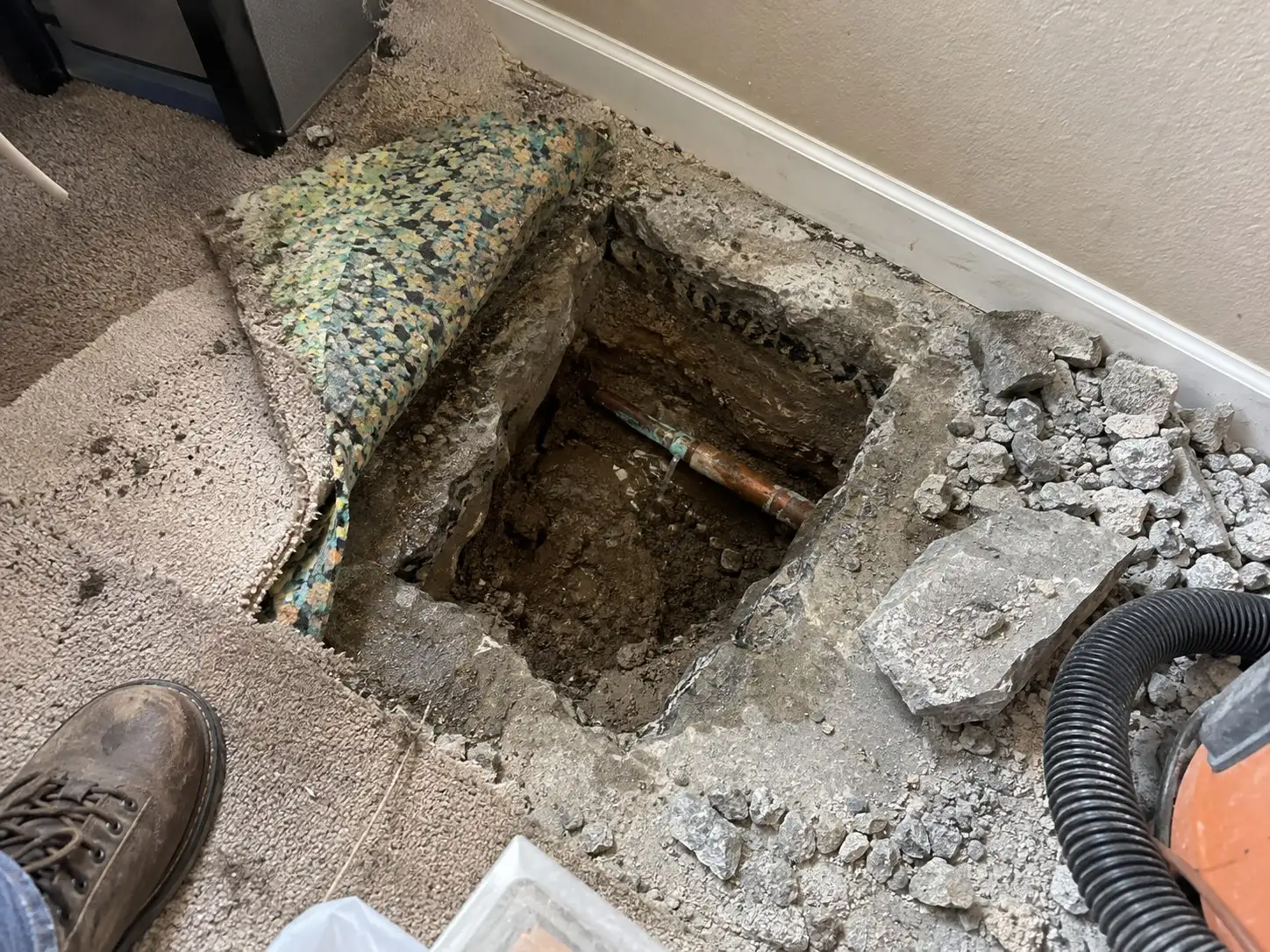
A slab leak is a leak in a water line that runs under your home’s concrete slab instead of through the attic or a wall. In a lot of Lake Elsinore’s tract homes, the hot and cold supply lines are copper, and they were run under the slab when the house was built rather than overhead. That’s a completely normal way to plumb a slab-on-grade house. It’s also a setup where a leak can run for a while before anyone notices, because the water goes into the soil under the slab instead of dripping somewhere obvious.
If you’re getting ready to sell, this is one of those things worth understanding on your own terms, before a buyer’s team brings it up first.
What actually happens when a slab pipe leaks
The pipe develops a small failure point, usually a pinhole from age and corrosion, and water starts escaping into the ground beneath the foundation instead of into a room you’d see. A hot-water line leak often shows up as a warm patch on the floor before anything else, because the escaping water is heating the slab and the flooring above it. A cold-water leak is quieter. It can run for a long time with no obvious sign except a water bill that doesn’t match your usage, or a faint sound of running water when every fixture in the house is off.
Copper doesn’t leak on a schedule. Plenty of homes go decades without an issue. But copper lines run under a slab do age, and once a leak starts, it isn’t something you can see the way you’d see a drip under a sink.
Signs you can actually check yourself
You don’t need special equipment for most of this. A little attention does most of the work.
Start with the water meter test. Find your meter, usually in a box near the street or driveway, make sure every fixture and appliance that uses water is off, including the icemaker and any irrigation, then watch the meter’s leak indicator or low-flow dial for a few minutes. If it’s moving with nothing running, water is going somewhere. Elsinore Valley Municipal Water District, which serves most of Lake Elsinore, also offers a meter test at the district yard if you want a technician to confirm a reading.
Walk the house barefoot, especially over tile or hard flooring, and feel for a spot that’s noticeably warmer than the rest of the floor. Check your last several water bills side by side. A jump that isn’t explained by a longer shower schedule or a new sprinkler zone is worth asking about. Listen in a quiet house, ideally at night, for a faint hiss or running-water sound with nothing turned on. And look at flooring and carpet near exterior walls and bathrooms for dampness, cupping, or a musty smell that wasn’t there before.
None of these prove there’s a leak. All of them are reasons to get someone qualified to look before you put the house on the market.
What a home inspection will and won’t tell you
A home inspection in California is defined by state law as a noninvasive physical examination. Your inspector is not going to break into the slab, and neither would I if I were the one out there. What a good inspection can pick up are the indirect signs: a water meter that won’t sit still, a damp spot, flooring that’s behaving strangely. When something looks worth a closer look, the report should say so plainly and point the buyer toward a licensed plumber or a leak-detection specialist rather than guessing at what’s under the floor.
If a buyer’s inspector flags a possible slab leak, that’s usually the first anyone in the transaction has heard of it. Finding out on your own schedule, before that happens, gives you room to actually deal with it instead of negotiating under a contingency clock. A pre-listing inspection is the way to get that same look before a buyer’s inspector does.
Your options if a leak turns up
Once a plumber confirms a leak, there are a few paths, and none of them is automatically the right one for every house.
Spot repair means opening the slab at the leak location, cutting out the bad section, and repairing or rerouting just that run. It’s the least invasive option when the leak is isolated and accessible, but it doesn’t tell you anything about the rest of the copper under the house.
A full repipe replaces the water lines entirely, usually rerouted overhead through the attic and walls instead of back under the slab. It costs more up front and it’s worth weighing when the copper is old enough that one leak can be a signal others may follow. Either way, this is plumbing and structural work, not something to schedule around convenience. Get more than one bid, and get them in writing.
Whichever route you take, the City of Lake Elsinore requires a plumbing permit for installing, altering, or repairing water piping. That permit is not optional paperwork. A repipe done without one is unpermitted work, and unpermitted work is exactly the kind of thing that comes back to bite a seller later, whether a buyer’s inspector catches it or a lender’s appraiser does.
Ask your insurer before you list, not after
Homeowners policies don’t treat every part of a slab leak the same way, and I’m not going to tell you what your specific policy covers because I don’t know, and neither does a generic article. What I can tell you is to call your insurer before you list, describe exactly what you found and when, and ask them directly what’s covered and what isn’t. Do this early enough that the answer can inform your asking price or your repair decision, not after you’re already in escrow explaining to a buyer’s insurance company why there’s a claim history on the house.
Disclosure: past leaks count, not just current ones
California’s Transfer Disclosure Statement, under Civil Code section 1102.6, asks sellers directly about known problems with the plumbing system, and it isn’t limited to what’s actively happening right now. If you had a slab leak repaired three years ago, that’s a known fact about the property, and it belongs on the form. So does a spot repair that seemed to solve the problem. Sellers sometimes assume that because a leak was fixed, it’s no longer relevant. It’s still something you knew, and the TDS asks about what you know.
This cuts the other way too. A seller who discloses clearly, with repair records and permit numbers in hand, is in a much stronger position than one who says nothing and lets a buyer’s inspector find dry-rotted flooring near a wall that was never explained. The seller disclosure guide walks through what else the TDS covers.
Keep your records
If you’ve ever had plumbing work done, hold onto the paperwork: the plumber’s invoice describing what was found and repaired, the permit number and final inspection sign-off from the city, and any warranty that came with the work. When a leak or a repair comes up in a disclosure conversation or a buyer’s question, being able to hand over the actual documentation is worth more than an explanation. It’s the difference between “here’s what happened and here’s proof it was fixed correctly” and asking a buyer to take your word for it.
The short version
Copper under a slab is normal in a Lake Elsinore tract home, and most of it ages fine. The risk isn’t the material, it’s that a leak under the slab doesn’t announce itself the way a leak under a sink does. Check your water meter, know your water bill history, and if anything looks off, get a plumber’s opinion before you list rather than after a buyer’s inspector asks the question for you.
If you’re thinking about selling and want a straight read on the house before you set a price, start with the home value tool. It’s the same eye I’d bring to your place in person.
Common questions
What is a slab leak?
It's a leak in a water supply or drain line that runs under your home's concrete slab instead of through the attic or walls. In many Lake Elsinore tract homes, the hot and cold supply lines are copper, routed under the slab, and they can develop pinhole leaks as the copper ages.
Will a home inspector find a slab leak?
Sometimes, through indirect signs like a slow water meter or a warm spot on the floor, but a general home inspection is defined by state law as a noninvasive physical examination. An inspector isn't going to open the slab. If something looks off, the report will typically recommend a licensed plumber or a leak-detection specialist look further.
Do I have to disclose a slab leak when I sell?
If you know about it, yes. California's Transfer Disclosure Statement asks sellers directly about known plumbing problems, and that includes past leaks you already had repaired, not just ones still active.
Do I need a permit to repipe in Lake Elsinore?
Yes. The City of Lake Elsinore requires a plumbing permit for installing, altering, or repairing water piping. A repipe that skips the permit becomes unpermitted work you'd have to disclose later.
Does insurance cover a slab leak?
It depends on your policy and the cause, and I'm not going to guess at your coverage here. Call your insurer before you list, tell them what you know, and ask directly what's covered and what isn't.