


This is the first entry in an ongoing series: one defect at a time, explained the way an inspector actually thinks about it, not the way a listing description glosses over it. This week’s entry is one of the more consequential ones a buyer can run into, because the pipe itself is usually invisible until it isn’t.
What it is. Polybutylene, often shortened to “poly-b” or “PB,” is a flexible plastic pipe that was marketed starting in the late 1970s as a cheaper, faster alternative to copper. It shows up in two forms: gray pipe run through walls and under slabs with plastic or metal crimp fittings, and a similar-looking tubing sometimes used for the main water service line coming into the house from the meter. It looks unremarkable, which is exactly the problem. A homeowner living with it every day has no reason to notice anything until a fitting or a section of pipe fails.
Which build years have it. Polybutylene plumbing was used widely from roughly the late 1970s through the mid-1990s, with use tapering off as the industry’s understanding of its failure pattern became public and litigation over the product accumulated through the 1990s. If a home was built or fully replumbed during that window, it’s worth checking specifically, rather than assuming a newer-looking house is automatically clear. Additions, remodels, and manufactured or mobile homes from that era used it heavily because of its low material and labor cost.
Why it fails. The core problem is chemical, not mechanical. Public water systems commonly use chlorine or chloramine as a disinfectant, and over years of exposure those oxidizers react with the polybutylene material itself, making it brittle and prone to micro-fracturing from the inside out. The pipe can look completely intact from the outside right up until a fitting lets go or a wall section splits, and because so much of the run is hidden inside walls, under slabs, or above ceilings, a failure often shows up as water damage well before anyone locates the actual break. This is different from a normal old-pipe failure you can usually see coming with staining or a slow drip; a poly-b failure is frequently sudden.
What a repipe actually involves. Replacing polybutylene plumbing means removing the old supply lines throughout the home and running new material, almost always copper or PEX, in their place. A whole-house repipe typically means opening some amount of drywall to access the old runs, which is why a “home-run” PEX system, where each fixture gets its own line back to a central manifold, has become common: it can reduce the number of walls that need to be opened compared to routing new pipe through the exact same paths as the old one. Expect the work to take multiple days, expect some drywall patching and repaint afterward even with a careful crew, and get more than one licensed plumber’s scope before assuming any single quote reflects the real job, since the amount of wall access needed varies a lot by how the original lines were run.
What this means at the negotiating table. Finding polybutylene during an inspection is not automatically a walk-away, but it is a real cost to plan for, not a cosmetic note to shrug off. Ask whether any sections have already been replaced, ask if there’s a history of leaks on file (repair receipts, insurance claims, or simply what the seller remembers), and get an actual plumber’s scope before deciding whether to ask for a credit, a price adjustment, or to walk. A home with poly-b plumbing and no history of failures is a different conversation than one with a documented pattern of leaks, and the only way to tell the difference is to ask directly and look at what’s actually behind the walls, not just what the listing says.
Common questions
How do I know if a house has polybutylene plumbing?
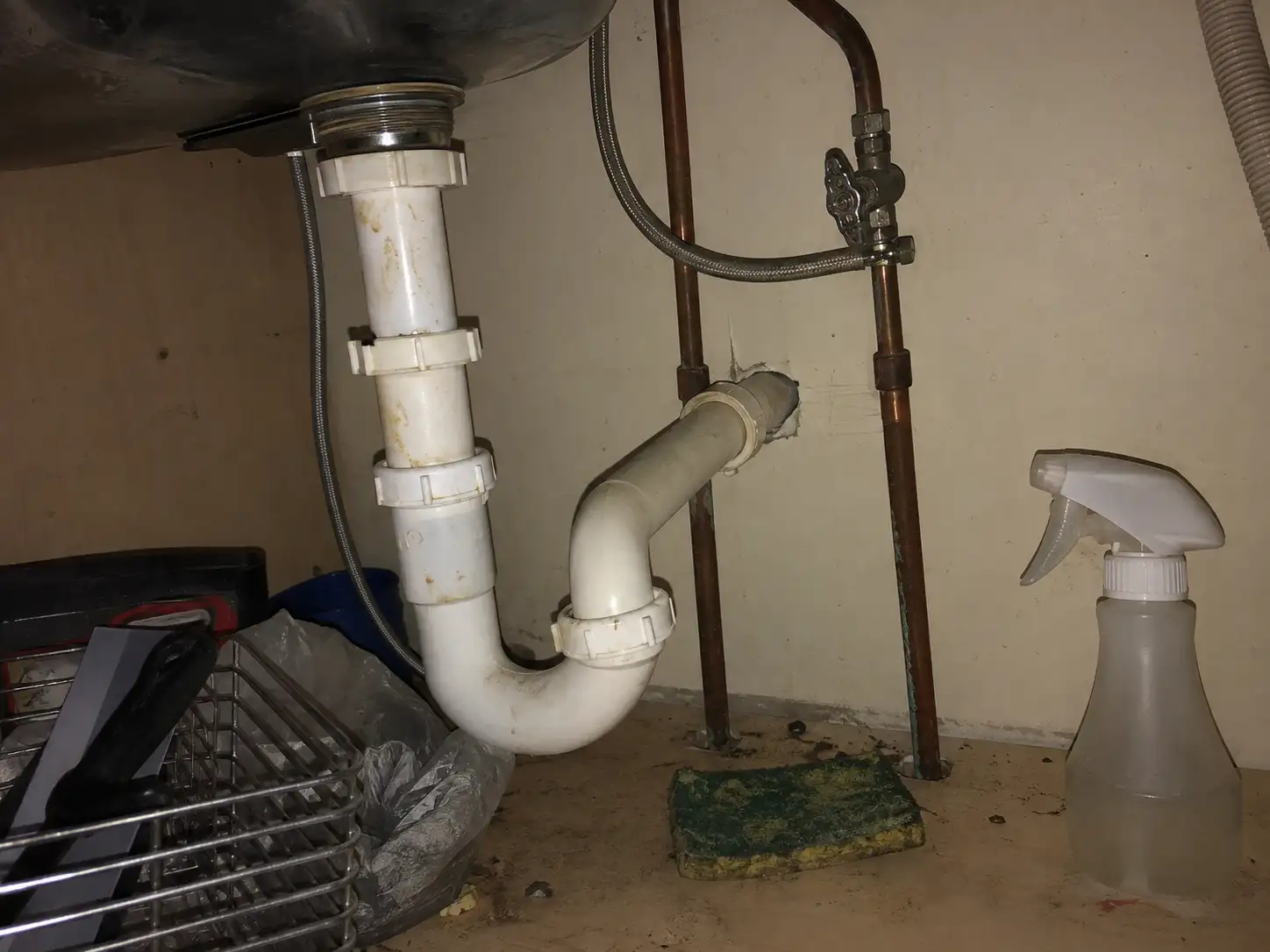
Look at the exposed supply lines under sinks, at the water heater connections, and at the main shutoff valve. Polybutylene is a flexible plastic pipe, usually gray or a dull off-white, and it's typically joined with plastic or metal crimp-style fittings rather than soldered copper joints. If you're not sure, ask your inspector to specifically identify the supply line material.
Does polybutylene plumbing always fail?
Not on a fixed timeline, and not every run of it. Some homes with polybutylene have gone decades without a failure, while others have had multiple leaks. The material is unpredictable rather than uniformly doomed, which is part of why insurers and inspectors treat it as a real risk rather than a certainty.
Will insurance cover damage from a polybutylene failure?
Sudden, accidental water damage from a burst pipe is commonly covered by a standard homeowners policy, but ongoing coverage for a home known to still have polybutylene plumbing can be harder to get, and some insurers ask about the plumbing material directly during underwriting. Confirm directly with the carrier rather than assuming.