



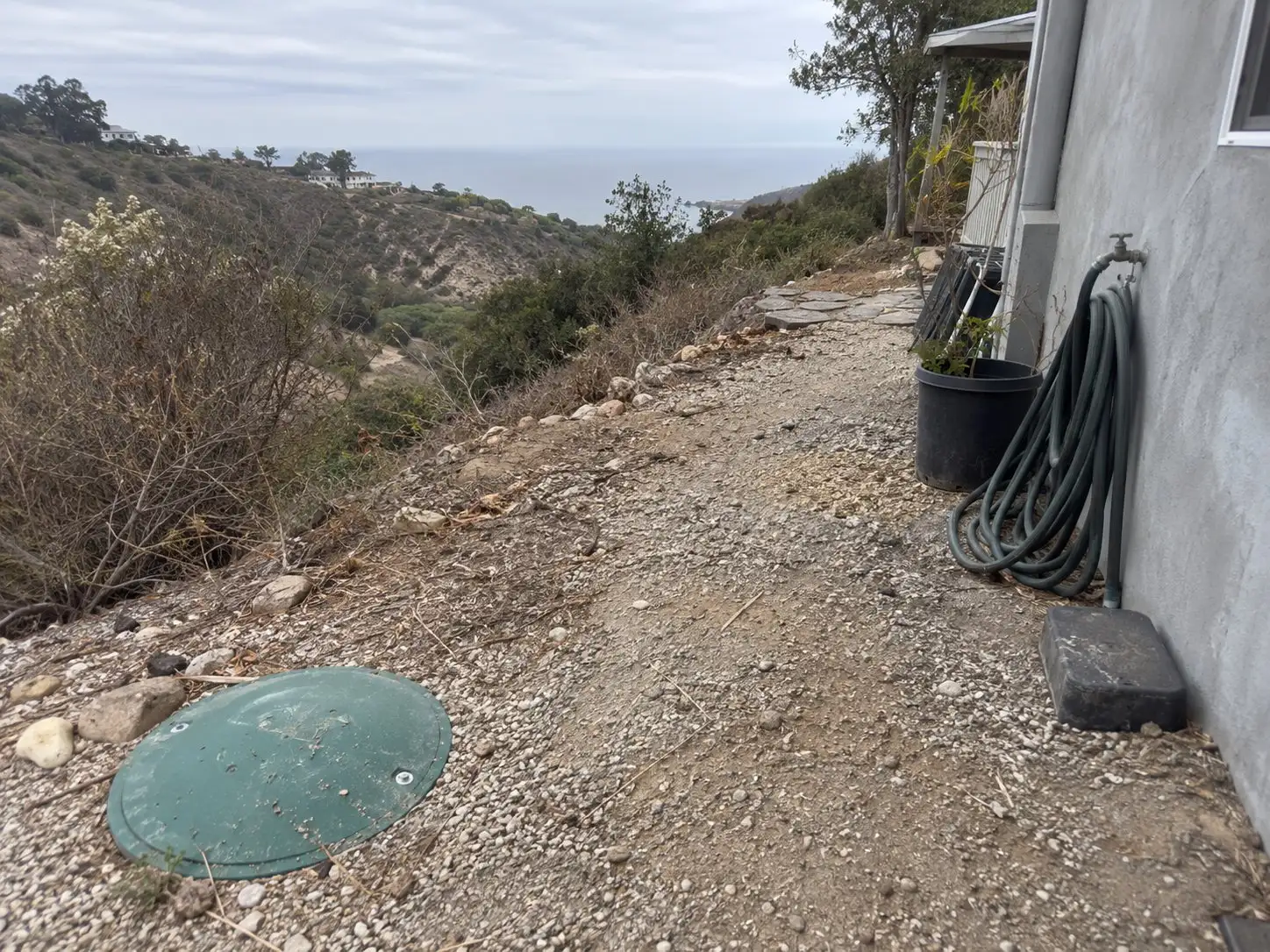
If the house you are selling or buying in Malibu is not on a sewer, the septic system is a regulated part of the sale. The City of Malibu runs its own operating permit program for these systems, and it has a specific step for when a property changes hands.
Malibu calls a septic system an onsite wastewater treatment system, or OWTS. This page follows the city’s wording. For the general septic questions that come up in any California sale, the Lakeside septic article covers them, and this one sticks to what is particular to Malibu.
Does Malibu require anything when a septic home is sold?
Yes. The city’s Operating Permit Program page says existing systems need an operating permit when the property is sold, when a septic permit is issued for a repair, or when the property will get a short-term rental permit. The page also states that operating permits are required to construct and operate new systems.
That makes the sale itself a trigger, not just something a buyer’s inspector happens to bring up. It is worth raising with your agent before you list or before you write an offer, because the timing of the paperwork matters.
Which part of the Municipal Code governs it?
Malibu Municipal Code Chapter 15.44 governs the operating permits, according to the city’s program page. The page says the chapter was amended in 2008 to add Section 15.44.070, which covers point of sale inspections, and amended again in 2017 for the criteria that decide when a system is treated as failed.
Two neighboring chapters are worth knowing by number. Chapter 15.40 regulates onsite wastewater treatment systems in general, and Chapter 15.42 sets their technical standards. If a document in your transaction cites one of these, it is part of the same regulatory family.
What the city asks for at a sale
The city’s Point of Sale Inspections FAQ lays out the sequence, and it depends on where the property stands.
If the system has a valid, unexpired operating permit, the buyer, whom the city calls the purchaser or transferee, must submit a Transfer of Operating Permit application within 30 days of the change in ownership. The application goes in with the appropriate fees, and its purpose is to put the permit in the new owner’s name. The city’s program page links the form.
If an inspection of the property during the sale shows that a repair, alteration, upgrade or replacement is needed, the FAQ describes a certificate of inspection route. A City-registered inspector submits an Operating Permit Inspection Report to the city showing the system failed. The owner and the city then sign a compliance agreement that sets a schedule for the work. The owner records that agreement with the city within three to five business days after signing it, so the obligations follow the property to future owners.
The FAQ sets two deadlines for a failed inspection. The owner must sign and notarize the compliance agreement within 30 days of the failure date, and the city issues the certificate of inspection within 45 days of that date.
If nobody obtains an operating permit or a certificate of inspection before the sale closes, the FAQ says the purchaser must obtain an operating permit for the system within 180 days of the purchase or change in ownership. In plain terms, a buyer who skips the step at closing does not escape it. It lands on the buyer.
How often is inspection required?
The city’s page does not state an inspection interval in the text reviewed for this article. What it does state is how long each type of operating permit lasts: five years for a residential conventional system, three years for a residential advanced system, and two years for commercial, multi-family and home occupation systems.
Those terms tell you when a permit needs to be renewed, and an inspection report is one of the forms the city collects. Because the page does not spell out the interval, the practical move is to ask the city’s wastewater staff what the permit on a given property requires and when it expires. The program page lists a Wastewater Management Program Specialist with a phone number at City Hall for exactly these questions.
What an inspection report means for negotiations
The inspection is done by a City-registered OWTS inspector, and the result is on the city’s inspection report form. The 2017 amendment concerns the criteria for a system to be treated as failed, so the specific failure criteria live in Chapter 15.44 and not in a general rule of thumb.
For a seller, this is a reason to look at the permit status early. A pre-listing inspection of a septic home surfaces findings while you still control the timeline, and it lets you decide whether to repair before listing, or to sell with a compliance agreement that a buyer will have to accept.
For a buyer, a recorded compliance agreement is not a footnote. It binds the property to a repair schedule, and the city’s FAQ says the terms are meant to reach all future owners. Ask to see the permit, the last inspection report and any agreement before your contingency period ends.
The Civic Center area septic prohibition
The Los Angeles Regional Water Quality Control Board, a state agency, adopted a resolution on November 5, 2009 prohibiting onsite wastewater disposal systems in the Malibu Civic Center area. The Regional Board’s page states that the prohibition applies to all dischargers in the area, including commercial and industrial facilities, public facilities and residences. It says new septic discharges are no longer allowed, that commercial, industrial and public dischargers were to cease discharge by November 2015, and that residences were to cease discharge by November 2019.
That is what the Regional Board’s page says, and this article does not go beyond it. The boundary is a mapped area, not a neighborhood name. If a property is anywhere near the Civic Center, do not guess whether it is inside. Ask the Regional Board and the city for the boundary map and the current status for that parcel, and have that answer in writing before you rely on a septic system there.
Replacing a system and the Coastal Development Permit
Malibu is a coastal city with its own Local Coastal Program. The city’s page on installing a new system says all development within city limits must follow Malibu’s Local Coastal Program, and that a Coastal Development Permit must be obtained from the city for the installation of a new onsite wastewater treatment system.
The city describes two stages. Planning reviews the application and schedules a Planning Commission hearing for the Coastal Development Permit. After that, Environmental Health, Geology, Public Works and other reviewers do a final review before the septic permit can be issued. The city advises contacting the Planning Department first to discuss requirements and set a submittal appointment.
The page does not separately say how these steps apply to a replacement of an existing system, so do not assume a replacement skips the process. Ask Planning early, since a hearing and multiple reviews are a scheduling question when a sale has a closing date. The seller disclosure guide also matters here: known septic problems and any pending repair obligations are things a seller should be ready to disclose.
Questions to settle before you list or offer
For sellers and buyers alike, the useful list is short. Is there a valid operating permit, and when does it expire? Has there been an inspection report, and did it pass? Is there a recorded compliance agreement? Is the property inside the Civic Center prohibition area? Would any needed work require a Coastal Development Permit? The answers decide who does what in the 30-day and 180-day windows above.
The short version
Malibu treats the sale of a septic home as a permit event under Municipal Code Chapter 15.44. A buyer files a transfer within 30 days when a valid permit exists, a failed inspection leads to a recorded compliance agreement, and a buyer who closes without a permit or certificate has 180 days to obtain one. The Civic Center area has a Regional Board prohibition, and new systems need a Coastal Development Permit. Verify each point with the city before you commit.
If you are thinking about selling and want to see where your home stands first, start with the home value tool. It is a starting point before a conversation about your specific home.
Common questions
Does Malibu require anything when a home on a septic system is sold?
Yes. The City of Malibu's Operating Permit Program says existing onsite wastewater treatment systems need an operating permit when the property is sold, and the city points to Malibu Municipal Code Chapter 15.44, including Section 15.44.070, for point of sale inspections. If the seller has a valid permit, the buyer files a transfer. If not, an inspection and possibly a compliance agreement come into play.
Who files the transfer of the operating permit?
The city's Point of Sale Inspections FAQ says the purchaser must submit a Transfer of Operating Permit application, with the appropriate fees, within 30 days of the change in ownership when the system has a valid, unexpired operating permit.
How often does a Malibu septic system have to be inspected?
The city's program page lists how long each kind of operating permit is valid, but it does not state an inspection interval in the text reviewed. Residential conventional systems are listed at 5 years, residential advanced systems at 3 years, and commercial, multi-family and home occupation systems at 2 years. Ask the city which date applies to a specific property.
Does a septic replacement in Malibu need a Coastal Development Permit?
The city says a Coastal Development Permit is required for installation of a new onsite wastewater treatment system, and that all development in Malibu must follow the Local Coastal Program. The city's page does not separately address replacement systems, so confirm with the Planning Department before assuming a replacement is exempt.
