



Sun City looks like one thing from the street, a tidy, established 55 and older neighborhood with a golf course and a clubhouse calendar full of activities. It is also a home built decades ago, and buyers today bring two very different sets of questions to it: who is actually allowed to buy here, and what is likely wrong with a house this age. Both questions have real answers. Here is what to know before either one comes up in escrow.
How old is a Sun City home, really
Most of Sun City was built starting in the early 1960s and kept being built out for roughly two decades after that. The City of Menifee’s own history page credits Del Webb with envisioning Sun City as an active retirement community starting in the 1960s, and it grew from there through several more building phases before Menifee incorporated as a city in 2008. If your home dates to that stretch, from the early 1960s into the early 1980s, it was built under a different code cycle, with different standard materials, than anything going up in Menifee today. That gap is the whole reason this article exists.
What actually limits who can buy here
Most Californians assume a 55 and older community runs on the same state law everywhere in the state. Sun City doesn’t. California Civil Code section 51.3 is the statute that normally lets a community restrict occupancy by age, and it defines a qualifying resident as 55 or older in a development of that kind. But the statute has its own exception written into it: by its own text, section 51.3 does not apply to Riverside County. Sun City sits in Riverside County, so the Legislature wrote a separate section just for this county, Civil Code 51.11. It defines a senior citizen housing development as one with more than 20 units and a qualifying resident as 55 or older in such a development.
The federal side matters just as much. The Housing for Older Persons Act, an exemption under the federal Fair Housing Act, lets a community keep an age restriction if it can show that at least four out of every five occupied homes have someone 55 or older living in them, and if it publishes and follows policies showing it intends to operate that way, with periodic verification of who actually lives there. Sun City’s own CC&Rs, enforced by the Sun City Civic Association, are what turn the state and federal framework into the actual rule you and your buyer live under.
What that means for your buyer
This is not a technicality your buyer’s agent can ignore. A buyer’s household does not automatically fail just because one person in it is under 55, since the federal rule is about the community’s overall mix, not a hard line on every single sale. But it is also not open-ended. The rule here is the same for every seller: do not let your buyer’s agent guess at this. Have them confirm the current occupancy rules directly with the Sun City Civic Association, in writing, before your buyer removes contingencies. It is a five-minute phone call that prevents a much worse conversation later in escrow.
The panel and wiring questions from this era
A home built from the 1960s into the early 1980s gets a specific set of electrical questions from any inspector who knows what they’re looking at, and they are worth asking on every one of these houses. Federal Pacific Electric made its Stab-Lok breaker panels from roughly the early 1950s into the early 1980s, and they were installed widely in homes built during that window. If your panel has never been swapped, there is a real chance that is what is behind your cover, and it is better to know the brand before a buyer’s inspector tells you. The Federal Pacific panel article walks through what that finding does to a transaction and what your options are, and the concerns it describes apply the same way here as they do anywhere else that panel shows up.
Wiring itself is the second question. The U.S. Consumer Product Safety Commission’s own guidance says homes built before 1965 are unlikely to have aluminum branch circuit wiring, but electrical cable installed in new homes and rewired circuits from 1965 into the mid-1970s may contain it, because a copper shortage pushed builders toward aluminum for ordinary 15 and 20 amp circuits during that stretch. The same CPSC guidance says homes built before 1972 that are wired with aluminum are 55 times more likely to have a wire connection reach a documented fire hazard condition than a home wired with copper. If your home falls in that build window and has never been rewired, that is a fair question for an electrician to answer before you list, not something to leave for a buyer’s inspector to raise cold.
Supply lines, drains and the roof
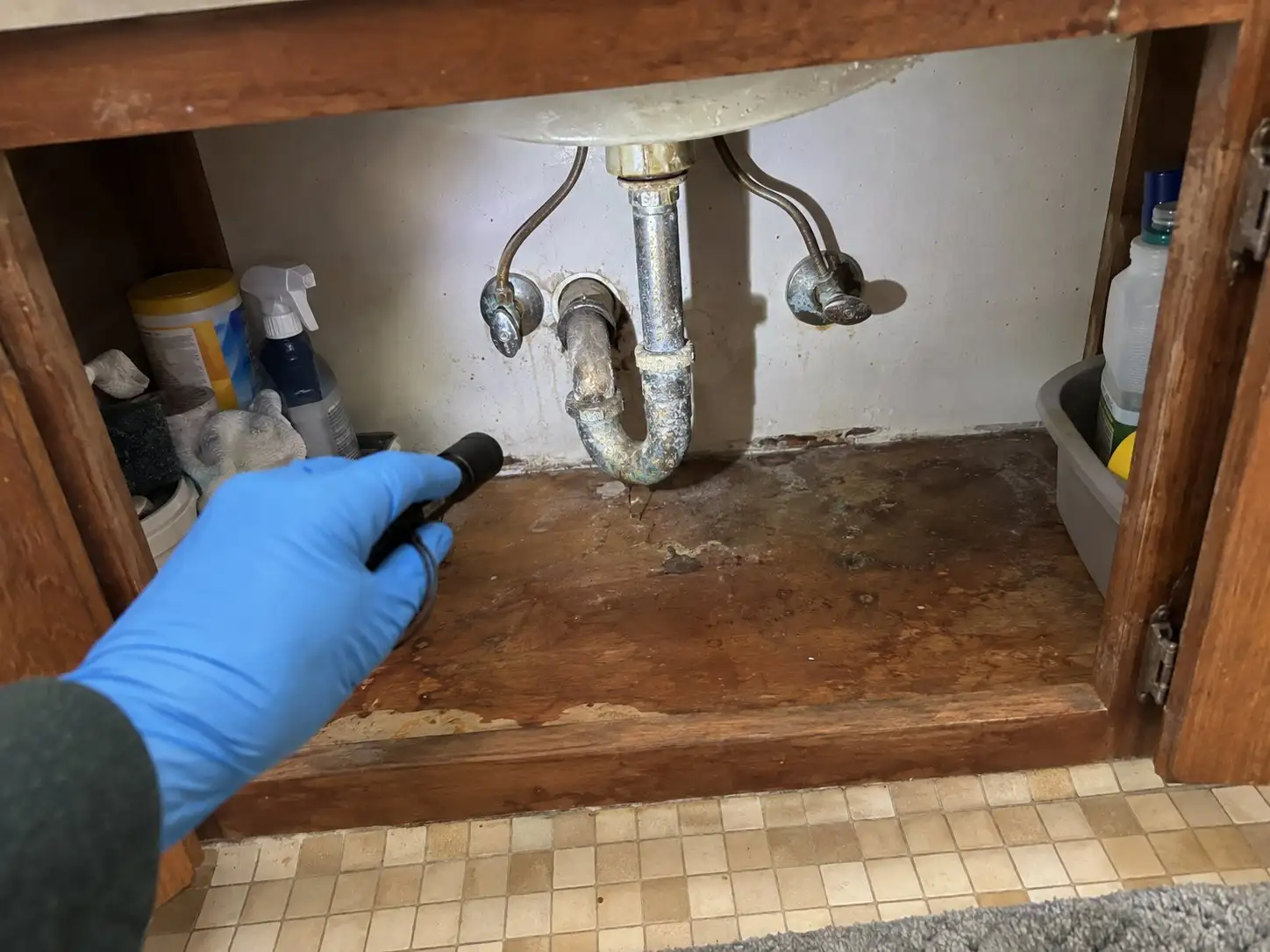
The plumbing and roofing questions are less exact but just as real. Homes from this era commonly started with galvanized steel supply lines and cast iron drain lines rather than the copper and plastic pipe used today, and both materials age in ways that show up eventually as reduced water pressure, staining, or a slow drain rather than a single obvious failure. There is no firm number of years either material is good for, because that depends heavily on your specific water and how the original plumbing was installed. What matters is that a home this age deserves a direct answer to a direct question: has the supply plumbing or the drain line ever been replaced, and if not, has anyone actually looked at what’s original. The same goes for the roof. An original roof from a 1960s or 1970s Sun City home is well past a typical service life by now, whatever the covering, and a buyer’s inspector is going to note its age whether or not it currently leaks.
What the Civic Association expects from a new owner
Membership in the Sun City Civic Association is not something a seller carries away and a buyer starts fresh. Under California’s Davis-Stirling Act, the law that governs homeowners associations statewide, membership in a common interest development’s association transfers with the property itself, so your buyer becomes a member automatically at closing, along with whatever assessment obligation is current at that time. The association’s own site lists its governing documents, including the CC&Rs, bylaws and a collection policy, but does not publish current assessment amounts online. Get the actual number in writing from the association or its management company before you go to market, since it is one of the first things a serious buyer will ask for and a stale figure from an old listing sheet will only cost you credibility.
What you have to disclose
California requires you to disclose known material facts about your home’s condition, generally through the Transfer Disclosure Statement under Civil Code section 1102.6. Finding out your panel is a Federal Pacific Stab-Lok, or that your wiring dates to the aluminum era, or that your original supply line has never been touched, doesn’t create a new legal duty by itself. It becomes something you have to disclose the moment you actually know it, whether that knowledge comes from a contractor’s invoice, an inspector’s report, or your own memory of when the house was last rewired. The seller disclosure guide covers the rest of what the form asks for, and if a repair was ever done without a permit, the unpermitted work article explains why that’s worth resolving before it becomes someone else’s discovery. A pre-listing walkthrough is the way to find all of this out, on your own schedule, instead of during a buyer’s contingency period with a clock running.
The short version
A Sun City sale carries two separate conversations most other Menifee listings don’t: who is actually eligible to buy under a federal rule instead of the state law people assume applies, and what an inspector is going to ask about a house built between the early 1960s and the early 1980s. Neither one is a reason not to sell. Both are reasons to have real answers ready before a buyer’s agent or a buyer’s inspector asks the question first. If you’re also weighing a move into a smaller home yourself, the downsizing guide walks through the tax and timing side of that decision.
Start with the home value tool for a number grounded in what’s actually happened on comparable homes, in a community with rules and a build era genuinely its own.
Common questions
Does California's senior housing law apply to Sun City?
Not the usual one. Civil Code section 51.3, the statewide senior housing law, says it does not apply in Riverside County. Riverside County has its own section instead, Civil Code 51.11, which applies only here. Sun City's age rule is written into its CC&Rs and also has to meet the federal Housing for Older Persons Act.
Can someone under 55 buy a home in Sun City?
That depends on the household and on the Sun City Civic Association's own occupancy rules, not on a simple age cutoff for buyers. The federal exemption Sun City relies on requires that at least one person 55 or older live in most occupied homes community-wide, not that every single buyer be 55. Ask the association directly, or have your agent confirm it, before you count on a specific household qualifying.
Does a Federal Pacific electrical panel show up often in Sun City?
It can. Federal Pacific Stab-Lok panels were installed widely in homes built from roughly the early 1950s into the early 1980s, which overlaps most of Sun City's build years. It is worth checking your panel's brand before you list rather than finding out from a buyer's inspector.
Do I have to disclose an old panel or old wiring when I sell?
If you know about it, yes. California's Transfer Disclosure Statement, under Civil Code section 1102.6, asks sellers about known conditions of the electrical system among other things. A written finding from an inspector or electrician is exactly the kind of thing that then counts as something you know.
